
An attractive piece of vacant land can hide a serious budget problem. A low purchase price won’t help if the property needs major fill, utility extensions, drainage work, or a smaller home than planned.
When you buy a parcel in the region, you’re buying more than a street address. You need to know whether it’s a workable building lot, along with its flood requirements, access, utility options, and long-term potential.
We have seen how early lot decisions affect the entire project. Start with the home you want, then confirm the land can support a Fort Myers custom-home project.
Key Takeaways
- Choose a lot based on the home you want to build, including its usable building area, setbacks, driveway, drainage, garage, pool, and outdoor living needs.
- Compare the total project cost rather than the purchase price alone. Clearing, fill, grading, utilities, septic, drainage, surveys, permits, and engineering can significantly affect the budget.
- Confirm zoning, flood requirements, wetlands, easements, access, and utility availability before closing. A listing or neighboring home is not proof that your intended home can be built on the parcel.
- Waterfront and island lots may offer strong lifestyle benefits but require additional review of seawalls, docks, canal access, elevation, construction logistics, and coastal restrictions.
- Use a written due-diligence period to obtain title, survey, zoning, environmental, flood, utility, and septic information before making a final commitment.
Start With the Home You Want to Build
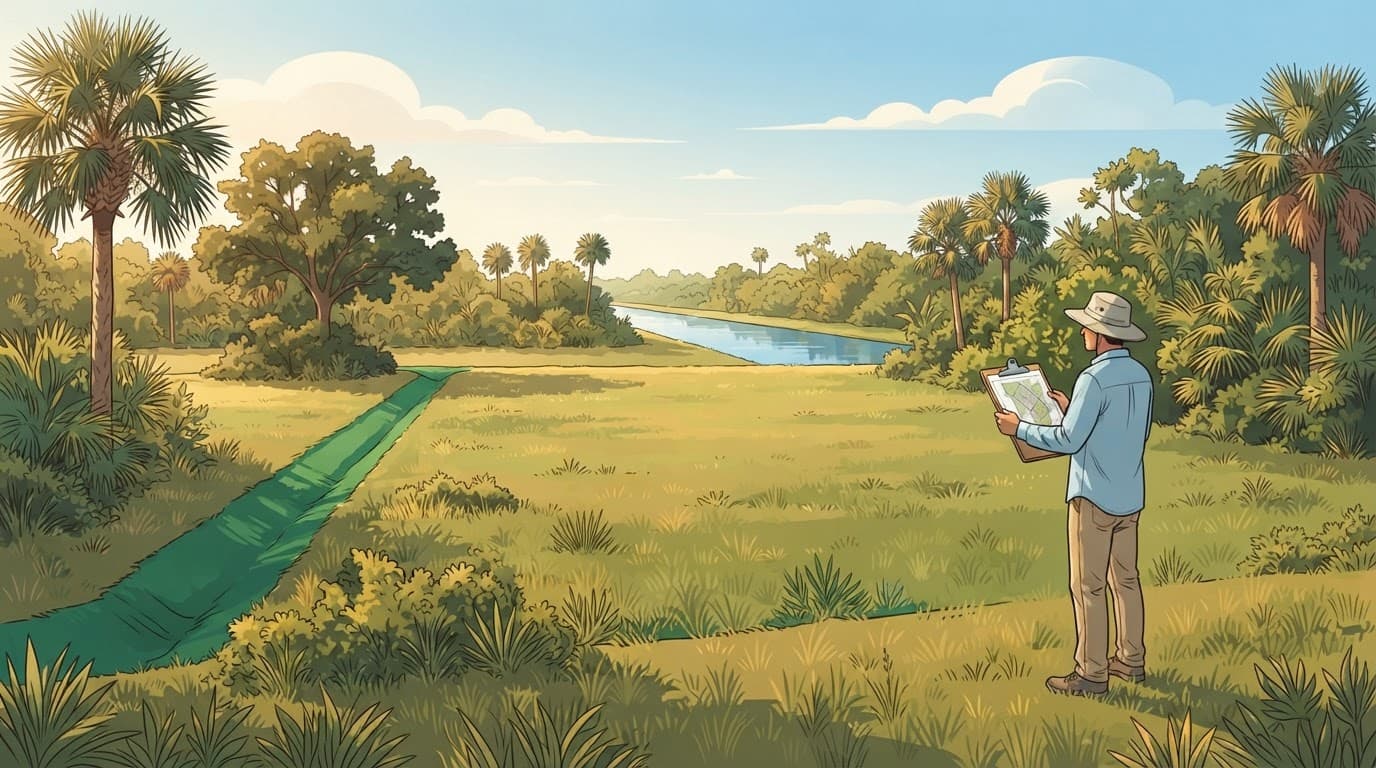
Vacant land should fit your plans before it fits your budget. It needs enough usable space for the home, garage, driveway, outdoor living area, drainage, and local setbacks.
Begin With Daily Life and Home Size
Think about how you will use the property every day. A wide lot may suit a three-car garage and a larger lanai. A deeper lot may work better for a pool, rear-yard privacy, or a guest suite.
Setbacks can reduce the actual building area more than buyers expect. Utility easements, drainage swales, and preserve areas can reduce it again. A lot that looks generous on a listing map may have a limited building envelope.
We recommend reviewing a rough site plan before making a final commitment. It does not need to be a finished set of house plans. It should show whether your basic vision fits the property without expensive compromises.
How Southwest Florida Land Shapes the Total Budget
The market for Southwest Florida lots is not one market. Location, water access, elevation, utility service, and permit conditions can create major differences between similar parcels.
Recent online searches for vacant land show the range. Entry-level off-water Cape Coral lots have appeared in the mid-$40,000s, while premium riverfront and Gulf-access parcels can exceed $450,000. Current searches near Naples have shown average asking prices above $850,000, while undeveloped listings in Fort Myers have averaged below $300,000.
A median list price is only a reference point. It does not tell you what it will cost to turn a specific piece of land into a finished home.
Compare Total Project Cost, Not Lot Price
Compare available building plots by total project cost, not just lot price. A finished building lot is only one part of the total investment.
Fort Myers, Cape Coral, Port Charlotte, and Naples all offer different opportunities. So do coastal and island communities such as Boca Grande, Palm Island, Manasota Key, and Little Gasparilla Island.
Waterfront land often carries a premium because of canal access, river views, boating, or beach proximity. It can also require more detailed planning for elevation, seawalls, docks, access, site protection, and insurance.
Use MLS listings through the multiple listing service. Local real estate agents can help identify lots for sale and broader land for sale. Then verify the listing information with county records, utility providers, surveys, and qualified construction professionals. A listing starts the conversation. It is not proof that your home can be built as planned.
Confirm Zoning, Setbacks, and Permit Requirements
Zoning defines permitted land use, but it is only one part of the review. For vacant land, confirm lot coverage, height limits, setbacks, driveway access, accessory structures, pool placement, and community rules.
Verify the Entitlements Before Closing
Ask the local planning department whether the parcel allows the type of home you want. If you plan a detached guest house, workshop, oversized garage, or pool cabana, ask about those items directly.
In Collier County, the official land-use application resources include planning, zoning, site development, environmental, and floodplain permit forms. Other Southwest Florida jurisdictions have their own review processes, so if you’re buying a Fort Myers parcel, confirm requirements with the governing city or county.
New construction also requires coordinated plans, inspections, and approvals, along with the right Florida construction permits for the planned work. We provide custom home construction services that begin with practical site review, clear planning, and a defined path to construction.
Do not assume an old home on a neighboring parcel proves your proposed home will receive the same approval. Codes, flood requirements, and local standards can change.
Put Site Work and Utilities in the First Budget
Vacant land is not a finished building site. The construction budget should account for work below grade and outside the home, not only the visible structure and finishes.
Price the Work Behind the Home
Clearing, grading, fill, drainage, driveway work, utility connections, septic design, and foundation requirements can change the hard cost of a project. These items are often discovered after a buyer has already focused on the home design.
Use this simple review before comparing lots:
| Budget Area | Questions to Ask Before Making an Offer |
|---|---|
| Site preparation | Will the lot need clearing, fill, grading, drainage work, or tree removal? |
| Water and sewer | Are public services available at the street, and are connection fees required? |
| Septic and well | Is septic allowed, and can the site support the required system? |
| Survey and engineering | Do you need a boundary survey, elevation work, soil review, or engineered plans? |
| Permits and access | Are permit fees, driveway approvals, inspections, and utility coordination included? |
For a Fort Myers project, ask real estate agents for seller disclosures, prior site-work estimates, or utility correspondence before builders and service providers verify those details.
A low-cost lot can become expensive when those answers come late. We recommend separating land cost, site-work cost, soft costs, and home construction cost from the beginning.
A finished home budget should never treat fill, drainage, and utility work as small details. On the wrong lot, they can control the project cost.
Review Flood Exposure, Wetlands, and Easements
Southwest Florida buyers, including those considering Fort Myers vacant land, should review flood exposure early. A flood-zone designation does not automatically prevent construction, but it can affect finished-floor elevation, foundation design, insurance, drainage, and permit requirements.
A Conservation Easement Is a Real Restriction
Wetlands, canals, preserves, mangroves, creeks, and drainage corridors may limit where you can build or what work can occur on the land. When records or site conditions raise concerns, a qualified environmental professional can help identify the next step.
A conservation easement is a recorded legal restriction that protects a natural area or water resource. The property may still be privately owned, but the easement can limit clearing, filling, building, access, or other activities within a defined area.
Review county records, the title commitment, survey, and environmental information together. The Florida Natural Areas Inventory conservation land map can provide helpful context when a parcel sits near protected land.
Public Surplus Lands Need Extra Review
The Southwest Florida Water Management District periodically identifies surplus lands that no longer support its original public purpose for sale. Its land-sale page lists current opportunities and explains how interested buyers can contact the District.
Some surplus parcels are sold as-is. Others may include a retained conservation easement or similar restriction. These sales can return qualifying land to private ownership and local tax rolls while preserving water resource protections.
Read the sale terms, appraisal information, recorded restrictions, access rights, and utility conditions before bidding. Publicly offered land is not automatically a simple residential building lot.
Waterfront and Island Lots Need Extra Planning
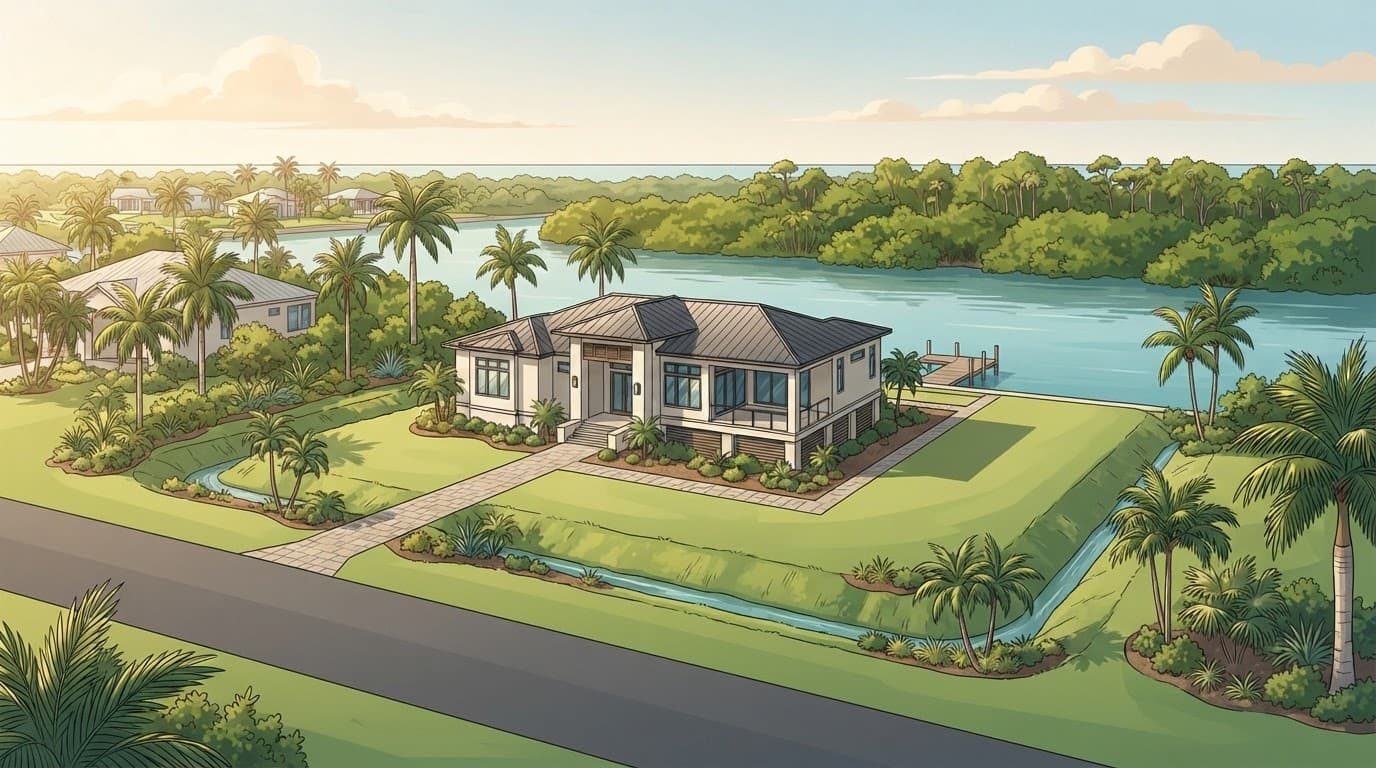
Waterfront land in Fort Myers can be an excellent choice for the right home. The same vacant land can create more questions about elevation, seawalls, docks, drainage, and coastal construction logistics.
Canal Access Is Not the Whole Story
A canal-facing lot may be freshwater, saltwater, Gulf-access, or limited by bridges and water depth. Confirm the details before paying a premium for a boating feature that doesn’t match your plans.
Ask about seawall condition, dock rights, canal maintenance, bridge clearance, waterway restrictions, and repair or upgrade costs. On barrier islands such as Palm Island and Boca Grande, material delivery, staging, labor access, and storm exposure can also affect construction planning.
For lots near preserves or protected shorelines, check recorded restrictions and preserve boundaries. Compare the parcel with the Florida conservation land database and request a property-specific review. The view may be beautiful, but the buildable area must still work.
Protect the Purchase With a Due-Diligence Period
Before making an offer on Southwest Florida lots, allow enough time to investigate the property. Researching vacant land and comparing lots for sale can take more than a quick review. A short due-diligence period can create expensive pressure and limit the reports you can obtain.
Put the Right Conditions in Writing
Your contract should allow you to review title, survey, zoning, flood information, utility availability, septic feasibility, environmental conditions, and access. It should also give you a clear option to cancel or renegotiate if the building lot does not support the intended home.
Keep your project file organized. Save listing details, surveys, emails, maps, title documents, utility responses, estimates, and permit records. For a Fort Myers purchase, ask real estate agents for disclosures, maps, or seller correspondence. Good documentation supports better decisions before closing and clearer communication after construction begins.
If you are considering surplus lands, state sale procedures may differ from a standard private transaction. The Florida DEP surplus property listings provide a useful starting point for reviewing state-owned opportunities and their published terms.
Frequently Asked Questions
What should I review before buying a Southwest Florida lot?
Review the proposed home against the lot’s building envelope, setbacks, access, utilities, drainage, flood exposure, easements, and environmental conditions. A survey, title review, zoning confirmation, and practical site evaluation can identify problems before closing.
Is the lowest-priced lot the best value?
Not necessarily. A low purchase price can be offset by clearing, fill, grading, drainage, utility connections, septic work, engineering, permits, or foundation requirements. Compare the complete land and construction budget before choosing between lots.
Are waterfront lots more difficult to build on?
Waterfront lots can require additional planning for elevation, seawalls, docks, drainage, insurance, and coastal construction logistics. Confirm the type of water access, bridge clearance, canal restrictions, shoreline conditions, and recorded preserve or easement boundaries.
Can a conservation easement prevent construction?
A conservation easement may limit clearing, filling, building, access, or other activities within a defined area. Review the recorded easement with the title commitment, survey, environmental information, and proposed site plan to understand the actual buildable area.
How long should the due-diligence period be?
The period should be long enough to review title, survey, zoning, flood information, utilities, septic feasibility, environmental conditions, and access. The contract should also provide a clear option to cancel or renegotiate if the lot cannot support the intended home.
Final Thoughts
Choosing a lot is a construction decision long before the first permit is submitted. When comparing a custom-home parcel in Fort Myers with one in Port Charlotte, choose the property that fits your home, budget, site conditions, and long-term plans.
We recommend closing only after the property has passed a practical review of zoning, utilities, drainage, flood exposure, easements, and buildable area. The right lot gives your project a solid beginning.
When you are ready to review a property and discuss your new-home plans, Get In Touch with our team.