
This guide helps buyers read a Wind Mitigation Report Florida buyers may receive by matching each checked category to supporting photos and construction records. The report documents features that resist damage from strong winds and may qualify your home for insurance discounts.
For Southwest Florida buyers who are relocating, documented features matter more than a listing’s description of “hurricane protection.” A new roof covering or impact-rated window package doesn’t establish that every part of the home has been upgraded.
We recommend starting with the form itself, then reviewing the covering, structural connections, and protected openings.
Key Takeaways
- An authorized inspector documents qualifying features on Florida’s standardized OIR-B1-1802 form.
- Covering and attachment details, water resistance, and opening protection influence available credits.
- A report generally costs $75 to $150 and remains valid for up to five years, subject to changes or inaccuracies.
Start With the Form and Supporting Evidence
Identify the Form, Property, and Inspection Date
Florida uses the Uniform Mitigation Verification Inspection Form, OIR-B1-1802. The Department of Financial Services requires the Rev. 04/26 form for evaluations completed beginning April 1, 2026.
The state’s mitigation inspection and form guidance explains that requirement.
First, match the address to the property you’re buying. Then review the date, inspector information, and completed signature fields. A seller’s older report can provide useful background, but it must still describe the home’s construction accurately.
Read the Evidence Behind Each Selection
The checked boxes summarize findings; photographs and records support them. Look for permits for the home’s covering, construction dates, connector photographs, and product identification for protected openings.
An “unknown” or undocumented selection doesn’t automatically mean the feature is absent. However, the insurer needs acceptable evidence before awarding the corresponding credit.
We recommend reading the report alongside the general home assessment. Wind mitigation documents construction features; it doesn’t replace an evaluation of leaks, deterioration, electrical defects, or other property conditions.
Read Roof Shape, Covering, and Age Separately
Understand the Roof-Shape Classification
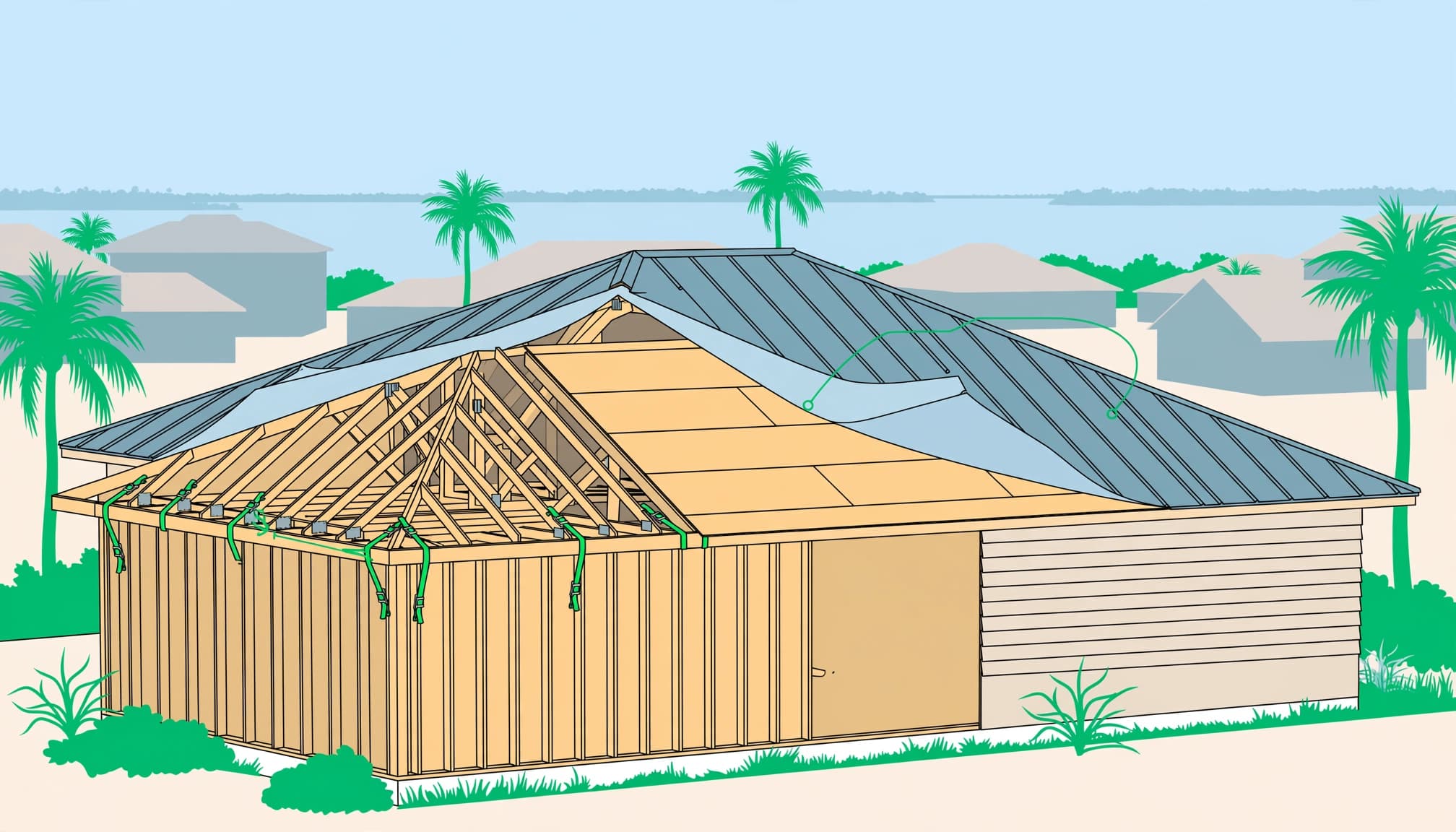
A hip roof slopes downward on all sides. A gable roof has triangular wall sections beneath its ends. Because hip geometry generally handles high winds better, qualifying hip roofs can receive the strongest roof-shape credits.
However, the inspector evaluates the actual assembly, including mixed shapes and additions. A real estate listing that calls a roof “hip” doesn’t establish its carrier classification.
Read roof shape independently of covering material. Metal, tile, and shingles describe the covering, while hip and gable describe the structure’s shape.
Separate Installation Age From Code Compliance
The roof-covering section addresses installation information and applicable standards. Homes built or re-roofed under the 2001 Florida Building Code or later can qualify for stronger credits when documentation supports the applicable classification.
A newer covering can improve the coverage outlook, but its installation date doesn’t prove that older connections were reinforced. Consider roof age and condition alongside installation records.
We recommend keeping permits and final sign-off records with the report. Our Fort Myers roof replacement planning guidance explains why covering, decking, flashing, and structural connections belong in a coordinated scope.
Compare Roof Deck and Roof-to-Wall Attachments
Interpret Nail Size and Spacing
Roof decking, or sheathing, is the wood layer beneath the roof covering. Its fasteners connect the sheathing to the roof framing.
The inspector evaluates nail type, size, and spacing because these details affect resistance to uplift. For example, 8d ring-shank nails at 6-inch spacing describes a defined roof deck attachment arrangement.
Read the complete finding rather than focusing on the nail designation alone. Spacing and installation details matter too. A new shingle installation doesn’t establish that the sheathing fasteners were upgraded.
Recognize the Connection Categories
Roof-to-wall attachments connect roof framing to the supporting walls. Their classification depends on the installed hardware and fastening details.
These common descriptions identify different connection arrangements:
| Connection | What It Describes |
|---|---|
| Toenails | Nails driven at an angle through framing into the supporting wall assembly. |
| Clips | Metal connectors that join roof framing to the wall below. |
| Single wraps | Metal straps that extend over the roof framing member. |
| Double wraps | A qualifying arrangement of straps wrapping the framing on both sides. |
The category must match the installed assembly. A strap in one attic photograph doesn’t establish that every connection meets that classification.
Understand Water Resistance and Opening Protection
Identify Secondary Water Resistance
Secondary Water Resistance, often shortened to SWR, provides another barrier if wind removes the outer covering.
Qualifying systems can include a self-adhering peel-and-stick membrane or an approved foam-adhesive treatment at decking joints. Ordinary underlayment doesn’t automatically qualify, and attic spray insulation isn’t automatically an SWR system.
Because the finished covering can conceal this feature, installation photographs and roofing records are valuable supporting evidence. Read the inspector’s selection together with those records rather than assuming every newer covering includes qualifying protection.
Review Every Type of Exterior Opening
Opening protection includes windows, entry doors, skylights, and garage doors. Impact glass and impact-resistant windows must meet applicable product ratings, so verify the ratings for the products installed.
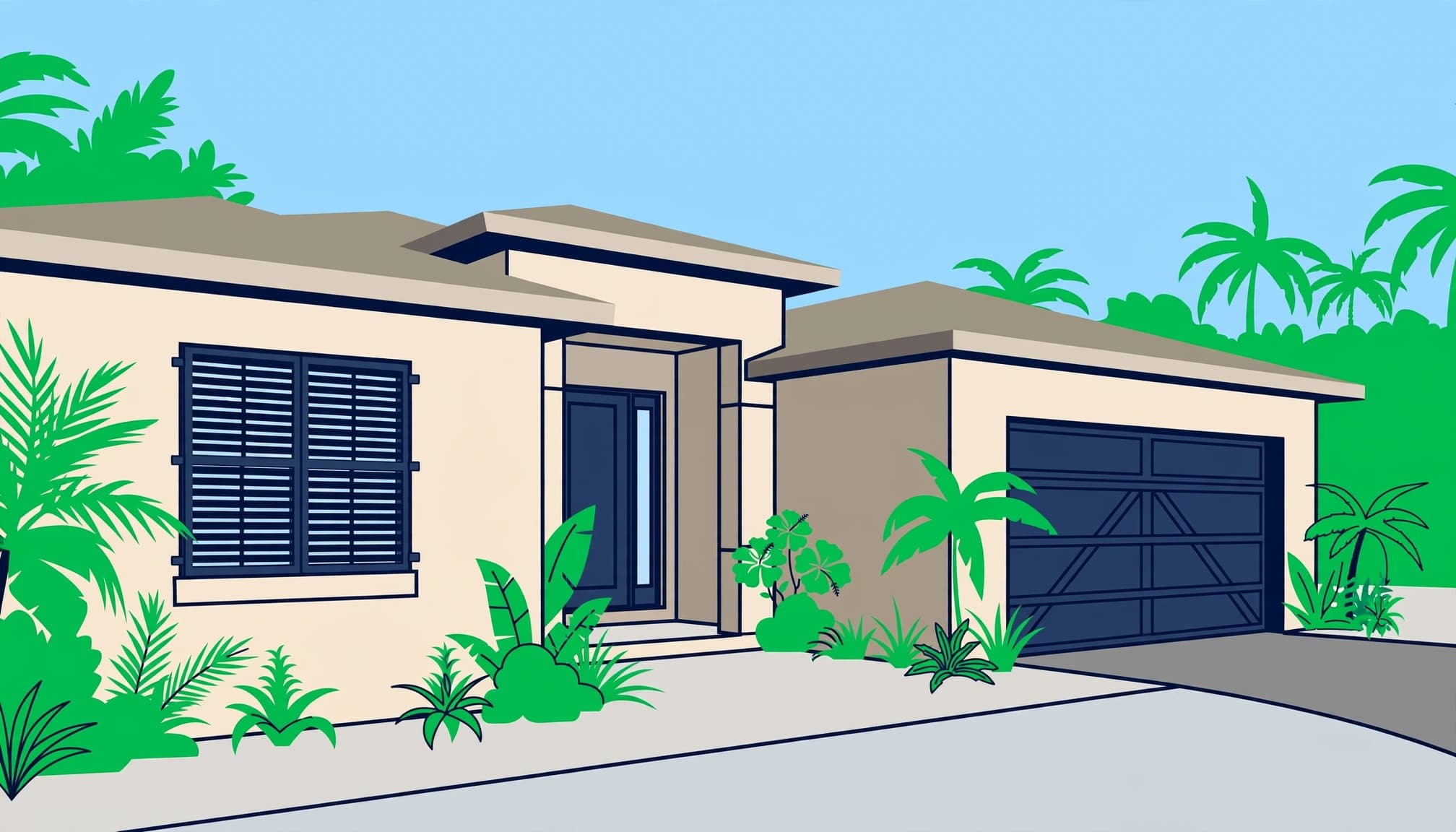
Partial upgrades can leave the home below the strongest opening-protection category. Protected windows don’t establish that the garage door or skylight has equivalent protection, and certified shutters or panels must cover every applicable opening.
Our guidance on Florida product approvals explains how approval records relate to actual products and installation conditions.
An approval number identifies an approved product. It doesn’t prove that every opening contains that product or that the installation follows its approval.
Translate the Findings Into Insurance Credits
Understand the Windstorm Portion of the Premium
Florida Statute 627.0629 requires insurers to provide actuarially reasonable discounts or credits for qualifying wind-loss-mitigation features.
These savings apply to the windstorm portion of your insurance premium. They don’t reduce every part of your coverage by the same percentage.
There isn’t one statewide dollar value for a clip, hip roof, or impact window. The carrier applies its approved rating approach to the documented combination of features. Evaluate the resulting property-specific quote rather than adding assumed discounts together.
Read FORTIFIED Certification as a Separate Finding
The 2026 form includes verification of an IBHS FORTIFIED Home designation at the Roof, Silver, or Gold level.
FORTIFIED certification documents compliance with that program’s requirements. A new covering, hurricane straps, or impact windows alone don’t establish a designation.
Read the recorded level alongside its supporting certification. The inspector’s report documents the designation for underwriting review; it doesn’t create the certification through a checked box.
Plan for Cost, Timing, and Report Validity
Order It During the Inspection Period
A private wind mitigation assessment typically costs $75 to $150, although access, property complexity, and provider pricing affect the fee. A home inspector may offer it as a low-cost add-on during the buyer’s inspection period.
Some providers also bundle it with a 4-point assessment, as described in Kin’s Florida inspection guidance.
The assessments have different purposes. A 4-point review checks the covering, electrical, plumbing, and HVAC systems for carrier underwriting. Wind mitigation focuses on features associated with wind resistance.
Ordering both early gives you time to review insurance costs before closing.
Understand the Five-Year Limit
The Office of Insurance Regulation states that a report remains valid for up to five years, provided there are no material structural changes or inaccuracies. Its wind mitigation resources explain this limit.
Five years is a maximum period, not permission to rely on outdated findings. Covering replacement, opening upgrades, or storm-related structural changes can make an earlier report inaccurate.
A follow-up assessment after completed improvements can document features that the previous report didn’t include.
Put the Report to Work Before Closing
When closing on a home, keep the completed report in your purchase file with permits, coverage quotes, and repair records.
- Match each important finding to the accompanying photographs and available construction documents.
- Give the signed report and supporting materials to your agent. Point out the report date and checked feature categories. Share photographs, permits, and product records, then ask how the findings affect credits and the quote.
- Review the property-specific quote and compare insurance costs, coverage limits, the hurricane deductible, and exclusions.
- Separate necessary repairs from optional upgrades when developing your ownership budget.
- Preserve the report and records of later improvements for future coverage and resale discussions.
Keep wind and flood coverage separate in your review. Standard homeowners coverage generally excludes rising floodwater and storm surge. A favorable wind mitigation report doesn’t establish flood protection.
Frequently Asked Questions
Is a Wind Mitigation Report Required by a Lender?
A lender usually doesn’t require this particular report. However, homeowners coverage is required for closing, and documented mitigation features can affect available credits and your premium. We recommend obtaining the report during the inspection period rather than waiting until closing to review carrier pricing.
Is Florida’s $10,000 Hurricane Grant Available?
The My Safe Florida Home program provides free wind mitigation inspections and assistance for approved improvements. Its grants can reach $10,000, generally with $2 in program funding for each $1 the homeowner contributes; low-income applicants have different contribution rules.
Citizens’ November 3, 2026 update states that the program isn’t accepting new grant applications.
Does Concrete Block Construction Guarantee Strong Findings?
No. Block walls don’t establish the condition of roof attachments, foundation connections, or opening protection. Our comparison of block and wood-frame homes explains why documented assemblies matter more than the construction label.
For buyers relocating from Minnesota, Wisconsin, or Indiana, this coverage-focused review may be unfamiliar.
Make the Purchase Decision With Documented Details
A useful wind mitigation report connects construction findings to supporting evidence and an actual insurance quote. Good purchase decisions use documented details to assess resilience and weigh long-term savings, not broad claims about hurricane readiness.
We help Southwest Florida homeowners plan structural improvements and hurricane restoration with a clear construction scope. If your purchase raises questions about repairs or upgrades, Get In Touch to discuss the property and your project priorities.