
Fort Myers roof replacement planning starts with three priorities: documented roof condition, hurricane resistance, and a complete installation budget. If you’re buying a Southwest Florida home, the roof belongs in your purchase decision before closing.
A fresh exterior doesn’t establish the condition of the decking, flashing, or roof connections. We recommend evaluating the complete roof system, then separating required repairs from optional upgrades.
Key Takeaways
- Roof age matters, but widespread damage, repeated leaks, and deteriorated decking are stronger reasons to replace.
- Budget for the complete installation, including tear-off, permits, underlayment, flashing, and concealed damage.
- Storm coverage depends on your policy and the documented loss; a new roof doesn’t automatically qualify for full insurance payment.
When Replacement Makes More Sense Than Repair
Evaluate Damage Across the Entire Roof
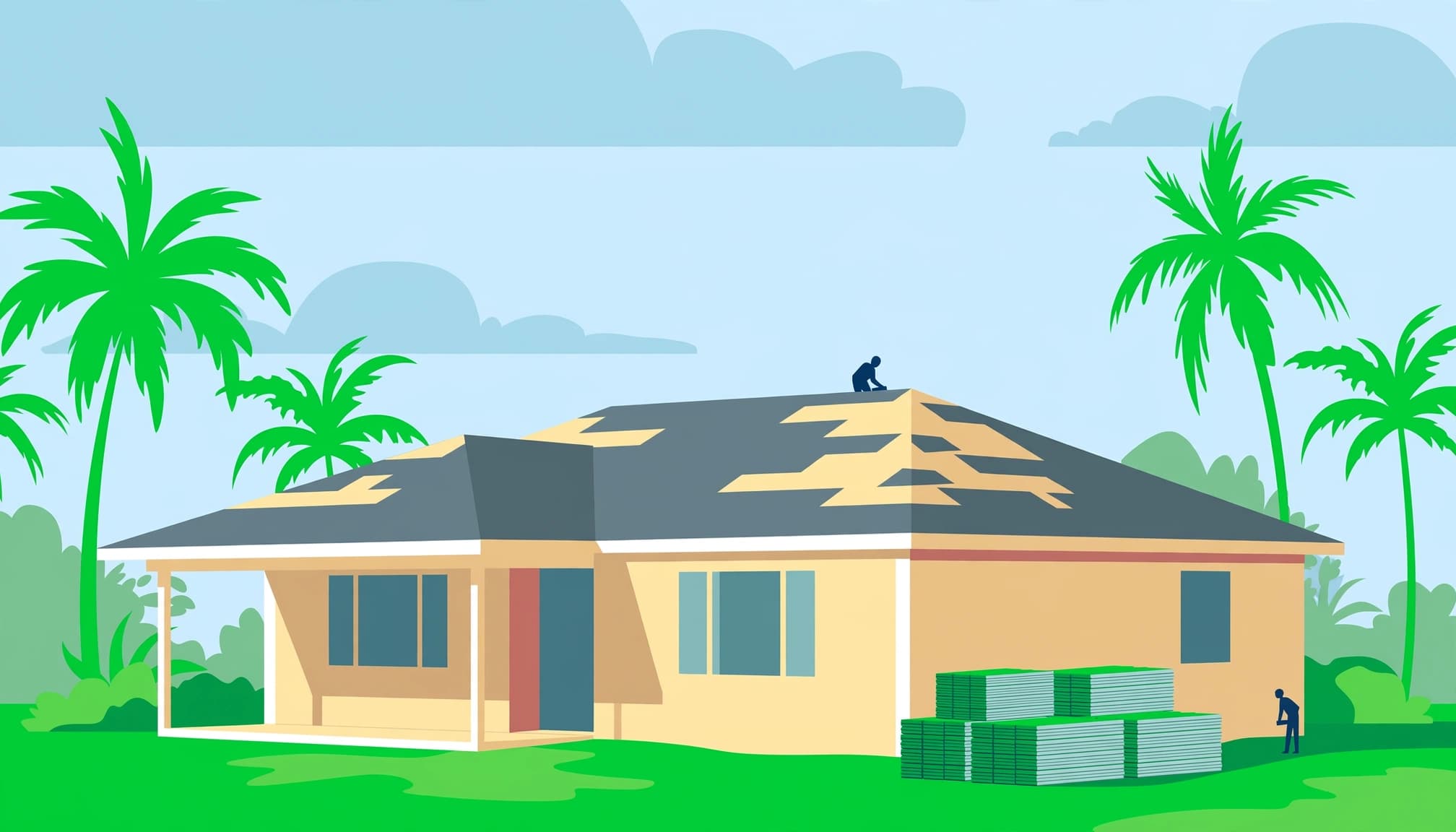
A localized flashing leak or a few damaged shingles may call for roof repair. Roof replacement becomes more practical when deterioration affects several areas, repairs keep failing, or the remaining materials can’t support a dependable repair.
A roof inspection should cover the roof covering, decking, underlayment, flashing, fasteners, and signs of moisture inside the attic. Missing shingles may be visible, but wet insulation and damaged wood can remain concealed.
An active roof leak needs immediate attention. Professional temporary tarping can limit additional water damage while permanent work is arranged. Don’t climb onto a storm-damaged roof.
Include Roof Condition in the Purchase Decision
Many Fort Myers homes are 15 to 25 years old. In Southwest Florida, an original roof in that age range deserves careful review, particularly after repeated storm exposure.
Older roofs can complicate insurance placement and weaken an appraisal when substantial replacement costs remain. For a previously damaged property, request insurance records, contractor invoices, engineering reports, inspection results, and before-and-after photographs.
Completed permits and repair records should establish what was restored. Our Fort Myers storm damage guidance addresses the broader structural and moisture concerns that can accompany roof damage.
Fort Myers Roof Replacement Costs and Lifespans
Roof replacement cost depends on measured roof area, material, complexity, and the condition beneath the covering. Interior square footage isn’t the same as roof square footage.
These broad 2026 Florida planning ranges provide a starting point, not a fixed local price schedule.
| Roofing Material | Approximate Installed Cost per Square Foot | Budget for 2,000 Square Feet of Roof | Estimated Service Life |
|---|---|---|---|
| Architectural asphalt shingles | $5 to $9 | $10,000 to $18,000 | 18 to 25 years |
| Metal roofing | $7 to $24 | $14,000 to $48,000 | 40 to 60 years |
| Concrete or clay tile | $8 to $25 | $16,000 to $50,000 | 40 to 60 years |
The takeaway: $30,000 isn’t automatically excessive, especially for metal, tile, a large roof, or complicated work. It deserves a detailed scope when proposed for a straightforward shingle replacement.
Steep slopes, multiple valleys, difficult access, decking replacement, and structural upgrades can increase costs. A proposal should identify tear-off, disposal, permits, underlayment, flashing, ventilation, and fastening requirements.
We recommend a written unit price for concealed decking repairs. That makes additional costs understandable if damaged wood appears during removal.
Service life isn’t a warranty. Heat, salt exposure, storms, maintenance, and installation quality affect performance. Tile coverings can outlast their underlayment; long-lasting tiles don’t establish that the entire assembly remains watertight.
Choose Materials for Southwest Florida Conditions
Match the Covering to the Home
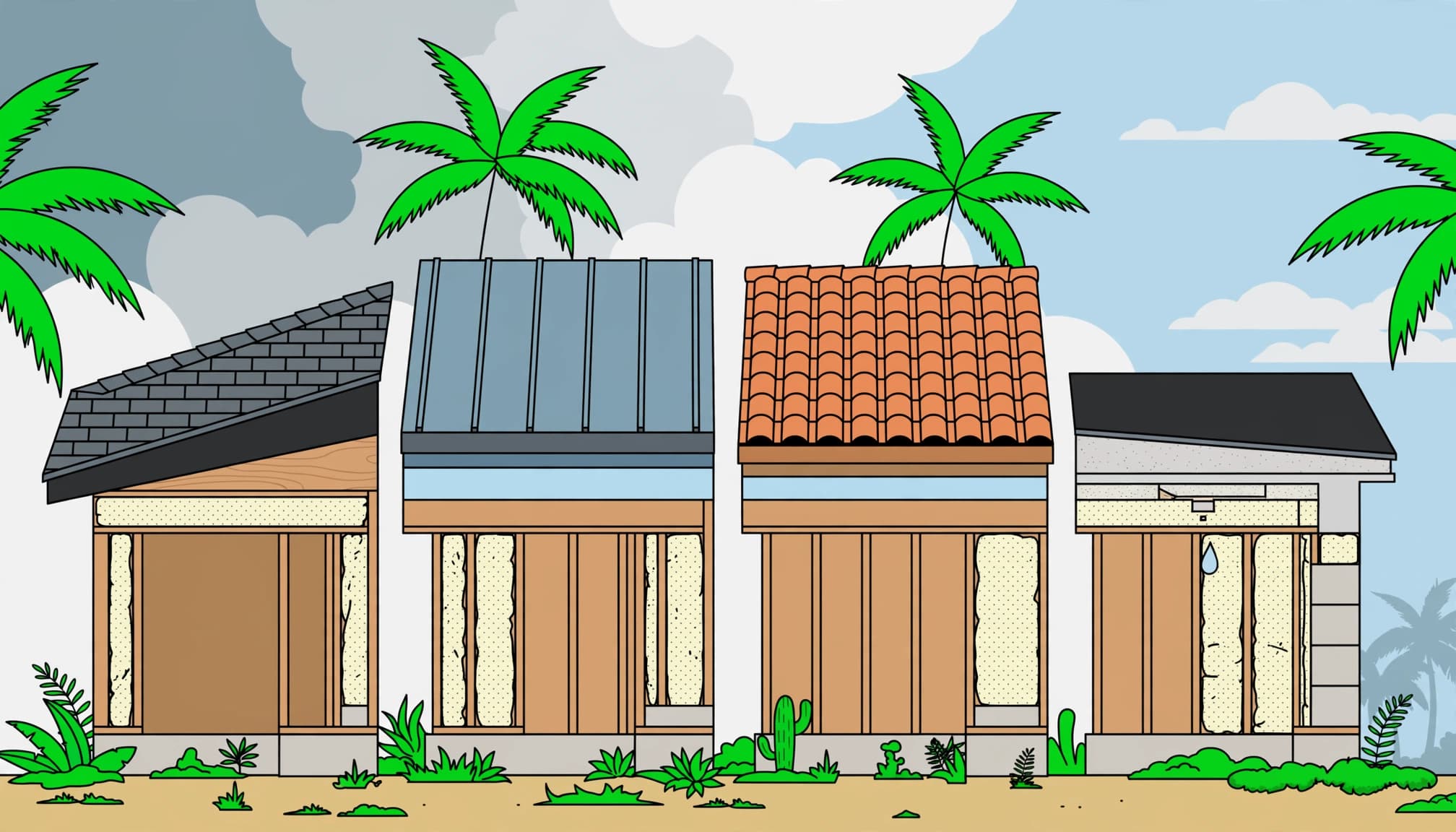
Architectural asphalt shingle roofs generally have the lowest initial cost. Metal roofing has a longer expected service life, while a tile roof suits many established Southwest Florida architectural styles.
During roof replacement, attachment methods, approved assemblies, flashing, and underlayment matter as much as appearance. Coastal properties also need materials and fasteners suited to salt exposure. Switching to tile can require engineering because its weight differs from other coverings.
Reflective surfaces and appropriate attic insulation can support energy efficiency by limiting heat transfer. A new roof doesn’t guarantee lower energy bills.
Florida’s wind-mitigation premium discount guidance explains another potential benefit of qualifying protective features. The roof covering alone doesn’t determine the discount.
Address Flat-Roof Drainage and Penetrations
TPO, a single-ply membrane, and built-up roofing are common commercial flat-roof systems. Homes with low-slope sections also need a system suited to their roof geometry.
On a flat roof, water must reach drains, scuppers, or gutters without persistent pooling. Standing water can accelerate deterioration and expose installation weaknesses.
Vents, HVAC equipment, and solar-panel attachments need carefully detailed flashing and seals. We recommend defining who removes and reinstalls rooftop equipment before pricing the replacement.
Plan for Permits, Wind Requirements, and HOA Approval
Establish the Correct Permit Path
The Florida Building Code 8th Edition (2023) took effect December 31, 2023. Confirm the current edition and effective date at publication.
The City of Fort Myers, unincorporated Lee County, and Fort Myers Beach have separate permitting procedures. A mailing address alone doesn’t establish the governing jurisdiction.
The Lee County roof permitting guide requires permits for roof replacement, repair, or re-covering within its jurisdiction. It also requires engineering approval when tile is installed on a structure that didn’t previously have tile.
The roofing contractor’s scope should clarify who handles permits, inspection scheduling, and final closeout records.
If you want the work completed before hurricane season, allow time for jurisdiction review, HOA approval, material delivery, and inspections. Schedules vary.
Specify the Hurricane-Resistance Details
There isn’t one wind-speed requirement for every Southwest Florida property. Building height, exposure, location, and the approved design affect the required roof assembly.
The plan should identify product approvals, fastening, roof edges, flashing, decking conditions, and any required connection upgrades. Roof-to-wall connections also deserve attention when structural work is involved.
HOA approval is separate from the building permit. Material, profile, and color restrictions belong in the selection process before ordering.
A new covering doesn’t establish that existing roof connections, openings, and drainage have been upgraded. Those items need their own documented scope.
Understand Storm Insurance Before Permanent Repairs
Separate Covered Damage From Roof Aging
Insurance may cover replacement when a hurricane or another covered event causes storm damage. The outcome depends on the policy, roof age and condition, damage extent, and insurer’s claim determination.
Ordinary wear and maintenance problems generally aren’t covered losses. An insurer may approve roof repair instead of replacement when the documented damage supports that decision.
Florida’s hurricane deductible guidance explains percentage-based deductibles. These apply to the insured dwelling limit, not the contractor’s repair price.
Wind-driven rain and rising floodwater also need separate documentation. Standard homeowners insurance generally doesn’t cover flooding.
Keep the Claim and Construction Scope Aligned
We recommend an organized sequence:
- Photograph damage when conditions are safe, report the insurance claim promptly, and preserve available evidence.
- Arrange temporary protection and retain receipts for tarping, drying, and emergency work.
- Obtain a written inspection and estimate covering demolition, materials, permits, disposal, and necessary code-related work.
- Compare the adjuster’s estimate with the proposed construction scope.
- After approval, have the contractor complete the agreed restoration. Document concealed damage for any supplemental claim.
Emergency protection shouldn’t wait for permanent replacement approval. However, premature removal of damaged materials can make the loss harder to document.
Keep elective upgrades separate from covered restoration. A premium material choice or unrelated improvement may remain your responsibility even when storm repairs are approved.
Compare Contractors, Contracts, and Warranties
Look Beyond Ratings and Certifications
Online ratings provide context, but they don’t establish the quality of a particular replacement proposal.
Local contractors list certifications with Owens Corning, TAMKO, CertainTeed, and IKO. Certification can affect available warranty options, but it doesn’t replace a detailed installation scope.
We recommend a licensed, insured roofing contractor with relevant local experience, clear exclusions, and written change-order terms. Our construction contract guidance addresses payment schedules, responsibilities, and closeout requirements.
Separate the manufacturer warranty from the contractor’s workmanship warranty. The documents should identify coverage duration, exclusions, registration requirements, transfer terms, and responsibility for installation defects.
Define the Work and Final Handover
The process should start with a returned call, a scheduled roof inspection, and written findings. If a provider advertises a free inspection, still request documented findings. Same-day or next-day availability isn’t a substitute for a thorough assessment.
The schedule should allow time for approvals, material delivery, tear-off, decking review, installation, inspections, and cleanup. Include temporary weather protection and a final walk-through.
Closeout should provide inspection records, coverage documents, and photographs of relevant concealed work.
Poorly installed gutter guards can damage shingles and jeopardize coverage. Review roofing requirements and any home coverage provider’s installation restrictions before adding them.
Frequently Asked Questions
How Often Should a Florida Roof Be Replaced?
There isn’t one replacement interval for every roof. Architectural shingles commonly have a shorter service life than metal or tile. Condition, storm history, and underlayment performance determine whether replacement is needed sooner. We recommend using age to trigger an assessment, not as the only decision.
How Long Does a Metal Roof Last in Florida?
A properly installed metal roof can provide approximately 40 to 60 years of service. Coastal exposure, coatings, fasteners, and maintenance affect that range. A long-lived panel system still needs sound flashing and attention to penetrations.
Does a New Roof Increase Appraisal Value?
A new roof can support a home appraisal, improve marketability, and reduce buyer objections when selling or refinancing. Any effect on property value isn’t guaranteed to equal the replacement cost. Documented permits, completed repairs, warranties, and coverage documents provide stronger support than appearance alone.
Plan a Roof Replacement That Protects Your Investment
A successful Fort Myers roof replacement in Southwest Florida combines appropriate materials, documented installation, and a clear financial plan. New manufacturer warranty coverage, improved comfort, and fewer buyer concerns can add value and peace of mind.
We approach hurricane restoration as part of the home’s overall condition. If you’re evaluating a purchase or planning storm-related improvements, Get In Touch to discuss your property, project scope, and next practical step.