
Recent storms like Hurricane Ian, Hurricane Milton, and Hurricane Helene have left properties across Fort Myers and Fort Myers Beach unsafe, exposed, and difficult to evaluate. If you are dealing with Fort Myers hurricane damage, focus first on protecting people and preventing additional loss. Insurance documentation and qualified repair work come next.
We understand that storm recovery involves more than replacing shingles or removing drywall. Local residents and business owners taking part in ongoing recovery efforts often need to coordinate emergency repairs, insurance adjusters, permits, engineers, and construction crews.
Navigating the rebuilding process on Fort Myers Beach and throughout the greater area requires careful planning. A clear strategy helps protect your property, your claim, and your long-term investment as you guide your home or business through the rebuilding process.
Key Takeaways
- Prioritize safety by inspecting your property for hidden hazards like structural instability, downed power lines, and gas leaks before beginning any cleanup.
- Document all damage thoroughly with photos, videos, and itemized lists before making temporary repairs or discarding ruined materials.
- File your homeowner’s and flood insurance claims promptly, keeping detailed records of every conversation, deadline, and repair invoice.
- Hire a licensed, insured contractor with local experience to handle structural repairs, permitting, and supplemental insurance claims effectively.
Secure The Property Before Cleanup Begins
Do not enter a damaged home until you know it’s safe. Floodwater, unstable ceilings, exposed wiring, gas leaks, broken glass, and shifted structural elements can create hazards that aren’t visible at first glance, especially for coastal properties located on a barrier island like Fort Myers Beach.
Stay away from downed power lines and damaged utility equipment. If water is near electrical outlets, appliances, or the electrical panel, contact the utility company or a licensed electrician before entering those areas. Never use a portable generator inside a home, garage, lanai, or enclosed space. Following lessons from Hurricane Ian, local residents know that heavy storm surge and severe flooding damage can compromise every level of a building long before debris removal can even begin.
Look for warning signs such as:
- Sagging roofs or ceilings that may collapse without notice.
- Cracks around doors, windows, beams, columns, or concrete walls, which often point to underlying structural damage.
- Strong gas odors, sparking wires, or damaged electrical equipment.
- Standing water near outlets, panels, HVAC equipment, or appliances.
- Mold growth, sewage contamination, or water that entered through extreme flooding damage during Hurricane Helene or Hurricane Milton.
Once the property is safe to access, disaster preparedness principles suggest that you document everything before moving debris. Take wide photos of every affected room, then capture close images of damaged surfaces, materials, appliances, and personal belongings. Video can help show the path of water or the full extent of wind damage.
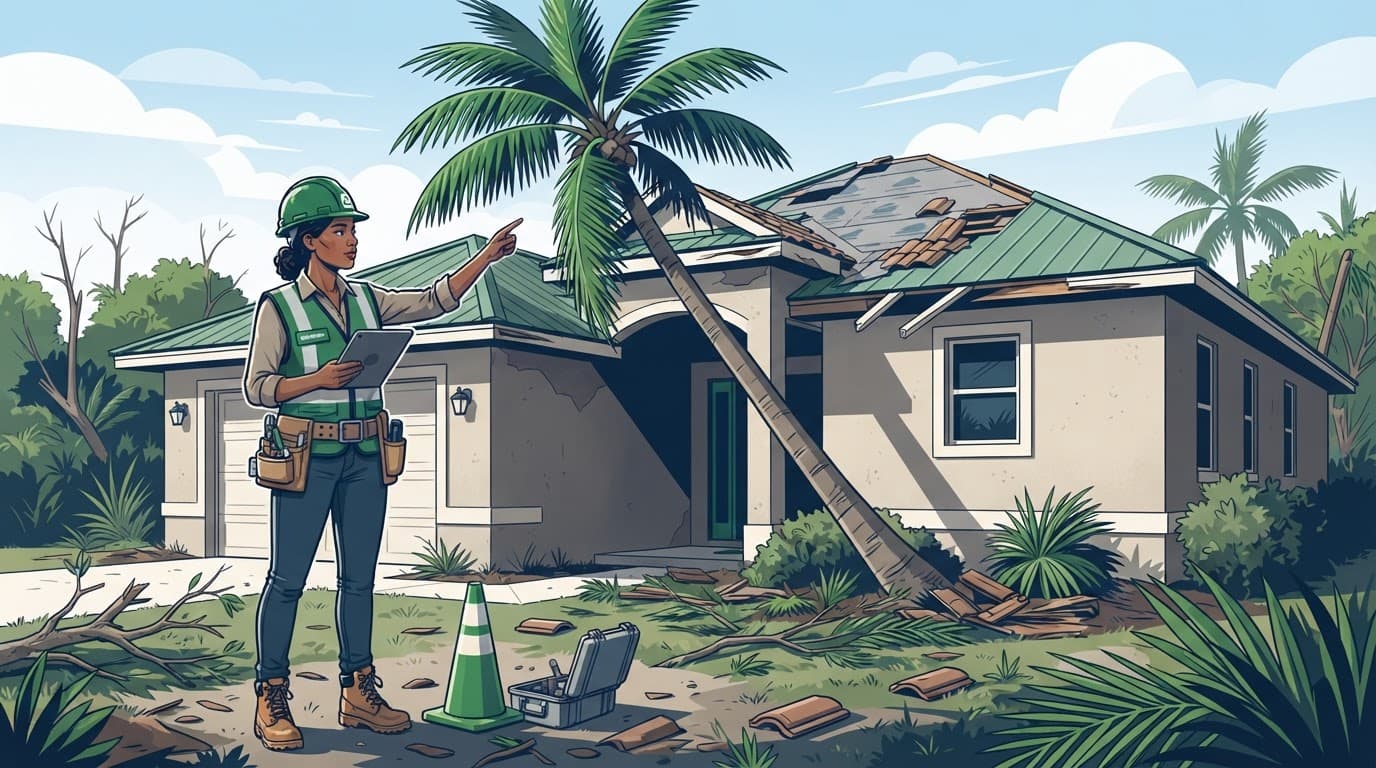
Make temporary repairs that prevent additional damage. A tarp over an opening, temporary boarding over a broken window, or professional water extraction may be reasonable steps. Keep every receipt, invoice, and photograph connected to that work. Avoid permanent repairs before the insurance adjuster has inspected the property unless an immediate safety issue requires them. For homeowners in Fort Myers Beach trying to recover from Hurricane Ian, proactive emergency preparedness and a thorough initial damage assessment are crucial steps. Property destruction caused by wind damage or a brutal storm surge demands careful handling so that cleanup efforts do not inadvertently destroy vital insurance evidence. After Hurricane Milton hit the area, many Fort Myers Beach families learned that managing early debris removal requires patience and meticulous recordkeeping.
Temporary protection can reduce additional loss, but it shouldn’t erase evidence of the original damage. Photograph first, preserve damaged materials when practical, and keep a complete record.
File Your Insurance Claims Promptly
Contact your homeowner’s insurance company or agent as soon as possible. If rising water occurred, notify your flood insurance provider separately so you can properly file your flood insurance paperwork. Wind-driven rain, storm surge, rising water, and interior leaks may fall under different coverage terms. Local residents and business owners navigating recovery efforts on Fort Myers Beach often find that wind damage and flooding damage require separate documentation.
Your policy controls what is covered, subject to deductibles, exclusions, limits, and the cause of loss. Do not assume that one claim automatically covers every type of hurricane damage.
Prepare a claim file with:
- The date and approximate time the damage occurred.
- Photos and videos taken before cleanup and during temporary repairs.
- A room-by-room list of damaged materials and personal property.
- Specific item descriptions, including brands, models, ages, and serial numbers when available.
- Emergency repair invoices, hotel receipts, storage costs, and other related expenses.
- Names, phone numbers, claim numbers, and notes from every insurance conversation.
Florida consumer guidance says insurers generally should acknowledge insurance claims within 14 days and accept, deny, or resolve insurance claims within 90 days after receiving the information they need. Requirements can vary based on the claim and policy, so record the date you reported the loss and request important instructions in writing. Following major events like Hurricane Ian, Hurricane Helene, and Hurricane Milton, local residents and business owners across Fort Myers Beach experienced how vital these timelines are for starting recovery efforts.
An adjuster may photograph, measure, and prepare an itemized estimate for your damage assessment. Be present during the inspection when possible. Point out damage that may be hidden behind cabinets, flooring, siding, insulation, or drywall. You can ask for the names of adjusters involved in your claim and request a copy of the detailed estimate. Property owners throughout Fort Myers Beach faced complex insurance claims while dealing with both wind damage and flooding damage after Hurricane Ian, Hurricane Milton, and Hurricane Helene.
Review the insurer’s estimate carefully. Compare it with the actual scope of repairs, including labor, materials, permitting, demolition, disposal, drying, and code-related work. If new damage appears after demolition or the initial estimate leaves out necessary work, ask about a supplemental claim.
FEMA assistance and disaster relief are separate from private insurance. The FEMA disaster information page for a previous Florida disaster states that the application deadline for that event has passed. For a future storm, confirm current eligibility and deadlines through FEMA before relying on older recovery information. FEMA may provide limited assistance for eligible needs, but it doesn’t replace a complete insurance settlement.
Fort Myers and Lee County recovery programs can also change over time. Keep records of applications, approval letters, contractor estimates, and repair invoices if you pursue local assistance to support ongoing recovery efforts on Fort Myers Beach.
Identify The Full Scope Of Fort Myers Hurricane Damage
Hurricane repairs often extend beyond what you can see from the street, especially for coastal properties and barrier island structures that endured severe property destruction. A missing section of roof or heavy flooding damage may lead to wet insulation, damaged framing, stained ceilings, compromised electrical systems, and flooring problems. Water that sits behind walls can create mold and decay long after severe weather from Hurricane Ian, Hurricane Helene, and Hurricane Milton has passed.
A complete inspection should consider the roof structure, exterior walls, windows, doors, soffits, fascia, siding, stucco, framing, concrete, insulation, drywall, flooring, electrical systems, plumbing, HVAC equipment, and cabinetry. The right scope depends on how the home was affected and how long moisture remained inside during a major storm surge.
Do not cover hidden damage too soon. Removing wet drywall may be necessary to dry the structure, but a qualified professional should photograph the work and preserve useful evidence. In some cases, an engineer or other licensed specialist may need to evaluate structural damage, foundation concerns, roof systems, or significant framing damage before the rebuilding process can safely advance in areas like Fort Myers Beach.
Stucco deserves close attention in Southwest Florida homes, particularly when evaluating Fort Myers hurricane damage after Hurricane Ian, Hurricane Helene, and Hurricane Milton. Cracks, detached areas, water intrusion, and damaged substrates can affect both the exterior appearance and the wall system behind it. When appropriate, use professional stucco repair services to address damaged areas rather than applying a cosmetic patch over a larger problem.
Permits may be required for structural, electrical, plumbing, roofing, window, and other repair work. A qualified construction company can help identify the required approvals and coordinate inspections as part of the broader rebuilding process for coastal properties and barrier island communities. Unpermitted work may create problems when you refinance, sell, renew insurance, or file a future claim.
Assessing structural damage accurately is vital when addressing Fort Myers hurricane damage in zones affected by an intense storm surge. Homes in Fort Myers Beach often require careful evaluations of hidden moisture and structural integrity to ensure long-term stability during the rebuilding process. Thorough inspections of every affected area support safer outcomes throughout the rebuilding infrastructure phase across Fort Myers Beach.
Addressing severe flooding damage and structural damage requires immediate attention from qualified specialists. Properties in Fort Myers Beach often face unique challenges from a heavy storm surge during Hurricane Ian and Hurricane Milton. Proper assessments of Fort Myers hurricane damage help guide the rebuilding infrastructure efforts required for safe habitation in Fort Myers Beach.
Choose A Licensed Restoration Partner
The contractor you select affects the quality, cost, schedule, and documentation of your recovery during the rebuilding process. Verify that the company is properly licensed and insured, then ask who will manage the project, who will perform the work, and how subcontractors will be coordinated.
A reliable restoration plan should include a written scope, material specifications, estimated schedule, payment terms, change-order procedures, permit responsibilities, and cleanup expectations. The estimate should explain what will be repaired, what will be replaced, and what conditions could change the price.
We recommend asking practical questions:
- Has the company completed hurricane restoration work in Fort Myers or nearby communities?
- Can it handle structural repairs, siding, stucco, flooring, framing, and finish work?
- Will it communicate directly with your adjuster and provide documentation?
- Who will obtain permits and arrange required inspections?
- How will hidden damage and supplemental work be handled?
- What warranty and closeout documents will you receive?
Be careful with pressure tactics during the rebuilding process. A contractor who demands a large payment before providing a clear scope, refuses to explain materials, or promises that insurance will pay for everything deserves additional review. Your insurer may recommend a preferred contractor, but you are allowed to choose a qualified company that fits your needs.
At Alter Home Group, we have worked in Southwest Florida since 2004, supporting local recovery efforts following major storms like Hurricane Ian, Hurricane Helene, and Hurricane Milton. Our experience includes remodeling, structural concrete, wood framing, siding, stucco, flooring, new construction, and hurricane restoration. That range matters when severe structural damage affects several parts of a home at the same time, or when a project involves complex debris removal and repairs for residential properties, workforce housing, and commercial spaces for business owners in Fort Myers Beach. Whether the job involves restoring individual homes, workforce housing units, or commercial spaces for business owners, local residents rely on comprehensive rebuilding efforts to restore community resilience along the coast. You need one organized plan, dependable communication, and construction work that meets current requirements to ensure long term stability throughout Fort Myers Beach and the surrounding barrier islands.

Protect The Home’s Long-Term Value
Storm repairs should restore more than appearance for coastal properties on the barrier island of Fort Myers Beach. They should address the conditions that allowed water or wind to enter and improve the home’s performance where the project and budget allow.
Discuss roof attachment, flashing, openings, exterior finishes, drainage, moisture control, and material selection with your construction team. A repair plan should balance code requirements, durability, maintenance, insurance considerations, and the design of the existing home.
If you are buying a Fort Myers property after hurricane damage, complete additional due diligence before closing. Request the seller’s insurance records, contractor invoices, permit history, inspection reports, engineering documents, and before-and-after photographs. Confirm that permits were closed and that repairs match the approved scope.
You should also understand the property’s flood exposure and whether suitable insurance is available at a reasonable cost. A home on Fort Myers Beach may look fully repaired while unresolved permits, hidden moisture, or incomplete structural work remain in the background. As the barrier island recovers, proper rebuilding infrastructure efforts after Hurricane Ian, Hurricane Milton, and Hurricane Helene highlight how elevated standards protect workforce housing and foster long-term community resilience.
Applying lessons in emergency preparedness and disaster preparedness helps mitigate future negative economic impact across Fort Myers Beach and nearby coastal properties. This focus safeguards critical workforce housing, maintains community resilience, and ensures that rebuilding infrastructure projects withstand future storms as effectively as possible.
Our two decades of construction experience have shown us that strong recovery work depends on details. The right materials matter. Proper documentation matters. Clear communication matters just as much across Fort Myers Beach.
Frequently Asked Questions
When is it safe to re-enter a home after a hurricane?
Only enter your property once local authorities have given clearance and you have verified there are no gas leaks, exposed electrical wires, or severe structural sagging. Coastal homes on barrier islands like Fort Myers Beach often face hidden foundation or flood compromises that require a professional inspection first.
Should I make permanent repairs before the insurance adjuster visits?
No, you should avoid permanent repairs until your insurance adjuster has fully inspected the property, unless an immediate safety hazard requires it. You can and should make temporary fixes like tarping roofs or extracting water, but be sure to save all receipts and take extensive photographs first.
How do I handle wind damage versus flood damage claims?
Wind damage and rising water (storm surge or flooding) typically fall under separate insurance policies with different deductibles and rules. You will need to notify your standard homeowner’s insurance provider for wind issues and your separate flood insurance provider if water entered from the ground up.
What should I look for when hiring a hurricane restoration contractor?
Verify that the contractor is properly licensed, insured, and experienced in local storm restoration throughout Southwest Florida. Ensure they provide a detailed written scope of work, handle necessary permits, communicate directly with your adjuster, and offer clear warranty documentation.
Conclusion
Navigating Fort Myers hurricane damage requires a calm, organized response, especially for local residents working through the rebuilding process. Following major storms like Hurricane Ian, Hurricane Milton, and Hurricane Helene, recovery efforts demand patience and a structured approach, from securing the property and documenting affected areas to filing insurance claims promptly. Business owners and local residents alike must carefully manage property destruction, debris removal, and flood insurance requirements while avoiding permanent repairs before professional evaluations are complete.
The broader rebuilding infrastructure and overall recovery efforts shape the long-term economic impact on the region, particularly across communities like Fort Myers Beach. Proper disaster relief and efficient insurance claims handling help streamline the rebuilding process for everyone involved.
A licensed and insured construction partner can help turn a confusing recovery into a clear plan with defined work, reliable scheduling, and quality results. If your property is beyond repair and you are weighing a full rebuild, our guide to custom home building costs in Fort Myers can help you budget the project, and our guide to choosing a custom home builder can help you pick the right team. When you are ready to discuss your property on Fort Myers Beach or the surrounding Fort Myers Beach area, Get In Touch with our team. Good restoration protects the home you have today and the investment you plan to keep tomorrow throughout Fort Myers Beach and beyond.