
Shallow groundwater in Florida affects foundation design, runoff management, excavation, and construction planning because it can be close to the building site. For Southwest Florida homebuyers, it deserves attention before choosing a lot or committing to a construction budget.
We recommend treating groundwater as a site-specific design condition, alongside soil strength, elevation, and flood exposure. Two properties on the same street can require different preparation and foundation work. A dependable construction plan starts with understanding the ground beneath your future home.
Key Takeaways
- Groundwater conditions vary by property and season; a regional aquifer map doesn’t establish conditions beneath your home.
- Foundation decisions should combine soil findings, groundwater information, finished-floor elevation, flood exposure, and local construction requirements.
- Construction budgets should account for runoff-control work, excavation conditions, engineered fill, testing, and any required dewatering.
What a High Water Table Means in Florida
The water table is the upper surface of saturated ground in an unconfined aquifer. Its position changes with rainfall, local runoff patterns, nearby water bodies, and groundwater use.
Shallow Groundwater and Deeper Aquifers Are Different
Water encountered during shallow excavation isn’t automatically water from the Floridan aquifer. Southwest Florida has multiple groundwater-bearing layers, including surficial and intermediate systems.
The USGS Floridan aquifer overview describes a system covering about 100,000 square miles beneath all of Florida and parts of neighboring states. It supplies drinking water for almost 10 million people.
Most withdrawals come from the Upper Floridan aquifer. A less-permeable unit separates it from the Lower Floridan, where water is generally brackish to saline. These regional layers explain Florida’s water supply, but they don’t establish excavation conditions on an individual lot.
Local Conditions Matter More Than a County Label
A property’s elevation, soil layers, fill history, and connection to canals or other water bodies affect groundwater conditions. Seasonal rainfall adds another variable. Sandy soil at the surface doesn’t rule out less-permeable layers below, so soil texture alone can’t establish excavation conditions.
For buyers in Fort Myers, Cape Coral, Naples, or Port Charlotte, the useful question is how groundwater affects that particular homesite. A county name or waterfront description can’t answer it.
How Limestone and Groundwater Affect Sinkhole Risk
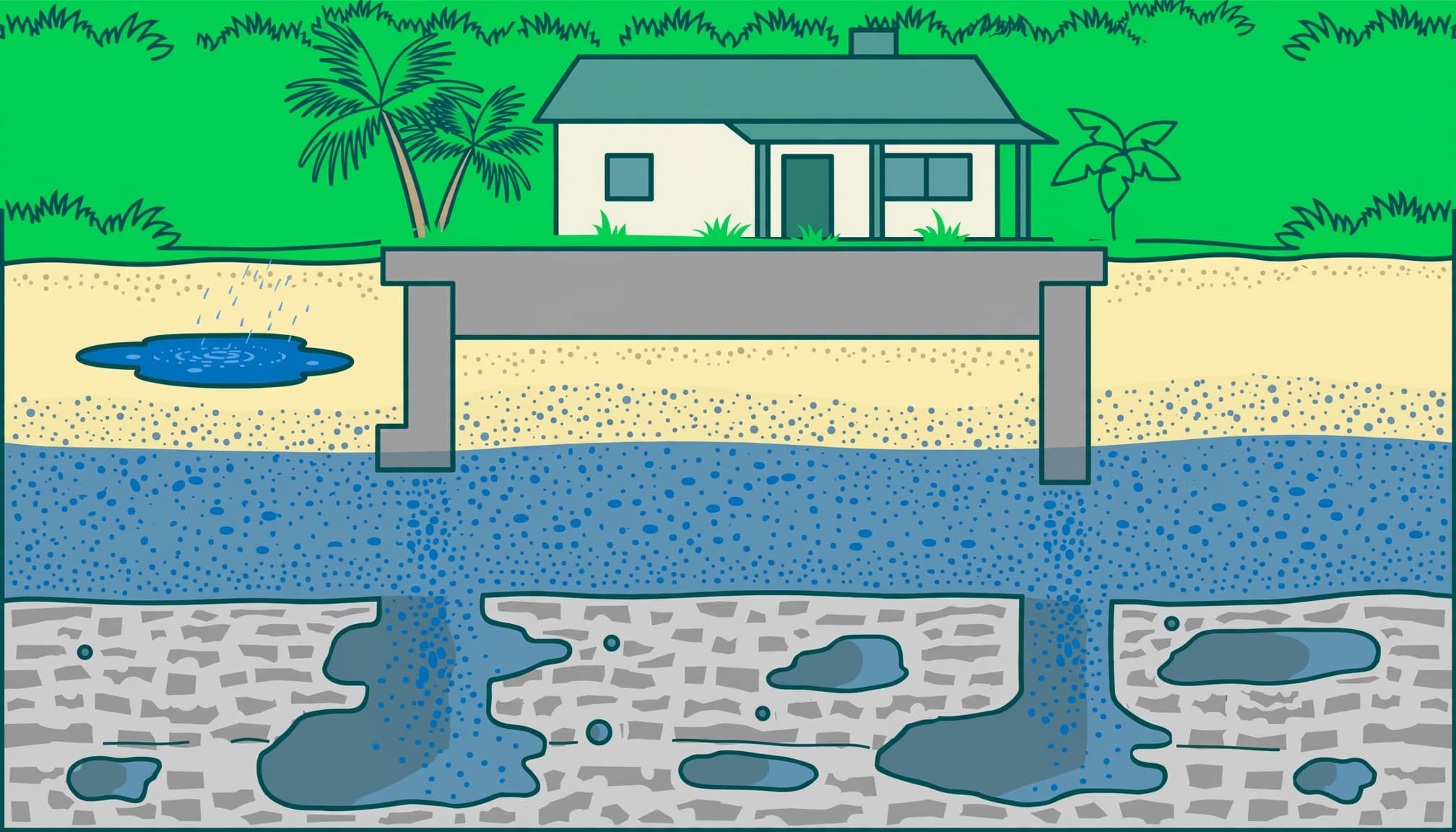
Florida’s geology adds another consideration beneath the surface. Much of the state rests on limestone that groundwater can gradually dissolve.
Karst Develops Over Long Periods
As slightly acidic rainwater moves through limestone over thousands of years, it enlarges openings and underground passages. This process creates karst topography, which can include caves, springs, depressions, and sinkholes.
Limestone alone doesn’t predict whether a particular home will experience a sinkhole. A cover-collapse sinkhole is one possible type, and local geology and subsurface findings determine whether further evaluation is warranted.
A geotechnical investigation may recommend additional evaluation when site records or subsurface findings indicate a concern. Recommendations should follow the property’s conditions rather than a statewide assumption.
Groundwater Changes Can Affect Ground Stability
Groundwater supports the surrounding geological system. Significant changes in water levels can affect how soil and underlying openings behave.
The USGS report on west-central Florida sinkholes connects groundwater development and fluctuations with sinkhole formation. Florida’s 1981 Winter Park sinkhole illustrates the potential scale: it expanded over three days and destroyed a pool and several buildings.
For construction planning, the practical response is appropriate investigation and engineered recommendations, not assuming every Florida lot needs the same foundation.
How to Assess Groundwater Before Buying or Building
We recommend reviewing groundwater early, while the home location, foundation concept, and site-work budget can still change without major redesign.
Obtain Property-Specific Measurements
A geotechnical investigation can document groundwater encountered during borings or test pits. The report should identify measurement dates and explain relevant limitations.
One reading captures conditions at that time. The engineer may also evaluate seasonal groundwater using soil characteristics, available records, and additional observations.
The USGS guidance on water-table depth explains why nearby well information provides context rather than a precise measurement for every property. Well records may report depth below land surface or water-level elevation relative to a reference datum. Those measurements aren’t interchangeable.
Our guide to geotechnical soil testing explains how subsurface findings support foundation and site-preparation decisions.
Review the Records Behind the Property
For an existing home, useful records include the survey, elevation documentation, approved drainage plans, permits, and previous geotechnical reports. Repair invoices and construction photographs can help explain earlier foundation or drainage work.
For vacant land, the review should also address fill placement, former structures, buried materials, utilities, and access.
The goal is a coordinated picture of the property. Soil bearing capacity, settlement potential, groundwater, and flood exposure answer different questions; each can affect the construction scope. For properties with septic systems, verify the seasonal high-water separation required for the system and applicable local health-department requirements before finalizing the site plan.
Choosing a Foundation That Fits the Property
A high water table doesn’t automatically require piles, and a dry-looking lot doesn’t establish that a slab is appropriate.
When a Slab Foundation Can Be Suitable
A slab-on-grade foundation can suit an inland or lower-risk property with suitable supporting soils, elevation, and drainage. Its performance depends on proper preparation beneath the concrete.
Loose fill, organic material, soft pockets, or unsuitable near-surface soil may require removal, replacement, or another engineered treatment. Water conditions can also affect excavation methods and preparation.
Flood exposure remains a separate consideration. Floodwater can wash away supporting soil or reach occupied areas even when the slab itself was properly constructed.
When Elevated or Deep Foundations Need Consideration
Elevated construction can reduce exposure of living areas to floodwater. Piles can transfer structural loads to deeper supporting material when the approved design requires them.
These systems also need engineered connections, corrosion protection, access planning, and inspection access. Wind loads, wave action, scour, and storm surge belong in the structural review.
For designs with a crawl space, specify waterproofing, vapor control, drainage, and access details for the site’s conditions and system. Without managed water, water intrusion can cause moisture damage and water damage to framing, insulation, and finishes. A sump pump may be appropriate when the engineered design includes a suitable discharge route and maintenance plan, but it can’t replace site-specific design.
FEMA Zones AE and VE don’t determine the full foundation design by themselves. The current Florida Building Code, local floodplain requirements, survey, and engineering findings must work together.
Our comparison of coastal Florida foundation options covers these differences in more detail.
Coordinating Drainage, Site Work, and Permits
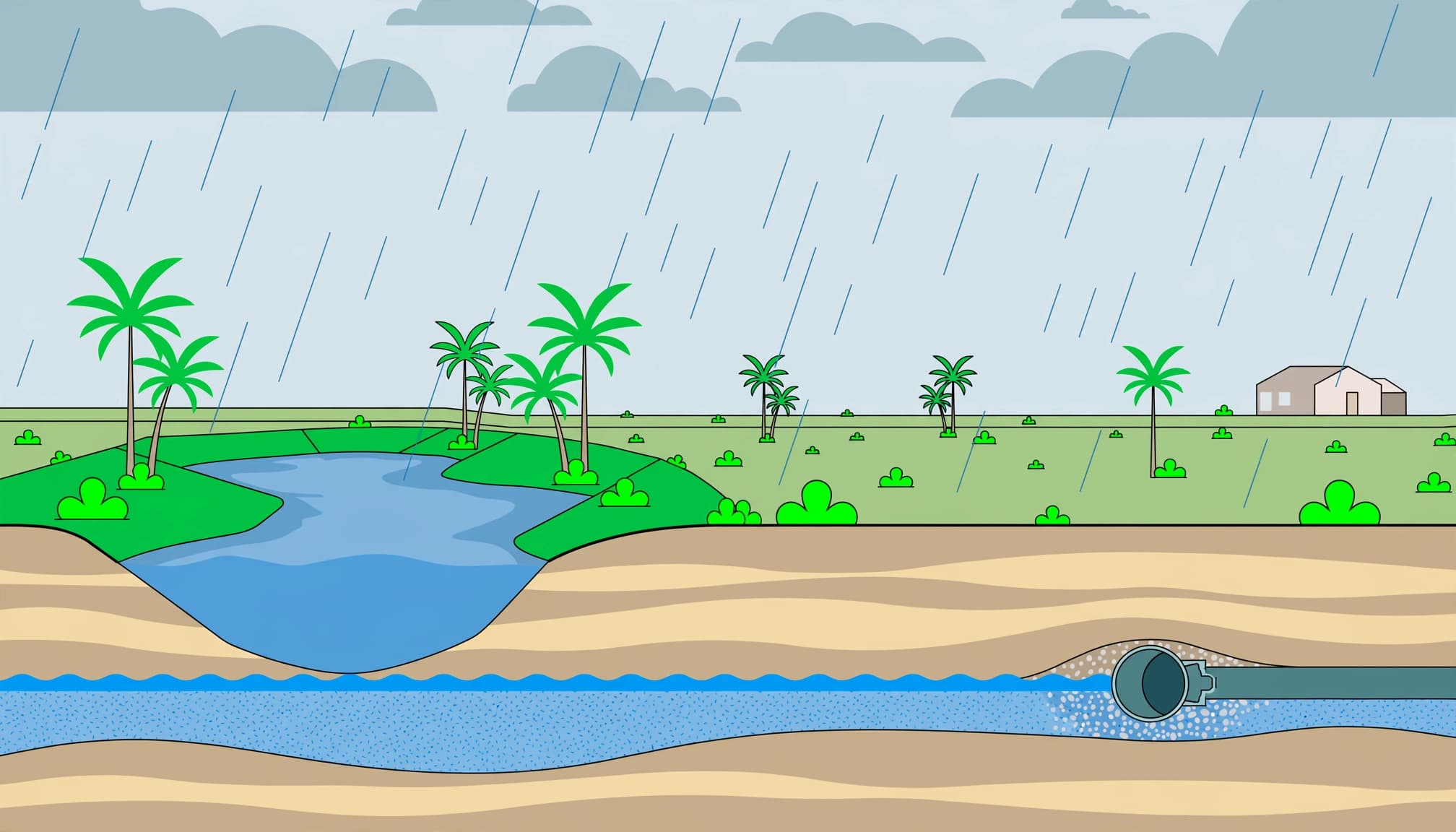
Southwest Florida’s flat terrain leaves little natural slope for runoff. Small elevation differences can affect groundwater flow, runoff routes, and where water collects during heavy rainfall.
Align Grading With Foundation Preparation
The site plan should show how roof, driveway, patio, and yard runoff reaches an approved receiving area. Finished-floor elevation and surrounding grades need coordinated design.
Raising a building pad can affect driveway slopes, stairs, utilities, and neighboring drainage. Adding fill without that coordination can create problems elsewhere on the site.
A high water table may require engineered dewatering or changes to excavation methods. A French drain can address localized subsurface water only when site conditions and a suitable outlet support it; it won’t lower a regional water table. Fill placement requires controlled layers, suitable moisture, and field density testing against the project’s specified criteria.
Our guide to residential site preparation explains the connection between grading, compaction, utilities, and foundation readiness.
Separate Stormwater Approvals From Building Permits
Florida DEP’s construction stormwater requirements generally apply to qualifying activities disturbing at least one acre. Smaller sites within a larger common development plan can also qualify when the discharge criteria apply.
This construction permit coverage is separate from an Environmental Resource Permit. FDEP and Florida’s five water management districts administer the ERP program for activities involving stormwater systems and other regulated resources.
A complete project scope should identify applicable approvals, temporary erosion controls, inspections, and responsibility for maintaining those controls throughout construction.
Coastal Groundwater and Saltwater Intrusion
Coastal properties require attention to groundwater and salt exposure as well as flood elevation. Conditions beneath the site can change independently of whether floodwater reaches the house.
The USGS explanation of saltwater intrusion identifies excessive groundwater pumping, sea level rise, and other factors that can affect coastal groundwater conditions. These factors can contribute to seawater intrusion into freshwater systems.
These processes matter for regional water supplies and coastal planning. They don’t predict conditions at an individual property or establish the correct foundation on their own.
For waterfront and barrier-island construction, we recommend coordinating groundwater findings with storm surge, wave exposure, soil conditions, wind loads, and corrosion protection. A foundation proposal should also account for utility placement and long-term maintenance.
The waterfront view is one part of the investment. The home’s supporting structure and site design need equal attention.
Frequently Asked Questions
How Can Buyers Tell Whether Groundwater Will Affect Construction?
A property-specific geotechnical report is more useful than surface appearance. It can document groundwater encountered, soil layers, settlement concerns, and preparation recommendations.
The findings should be reviewed with the survey, proposed home location, and drainage design before the construction scope is finalized.
Does a Low-Risk Flood Zone Mean Groundwater Isn’t a Concern?
No. Flood-zone mapping and groundwater investigation address different conditions. A flood designation doesn’t describe every soil layer or seasonal groundwater condition beneath a property.
Even outside a mapped high-risk flood area, site preparation and runoff planning require careful planning.
What Should a Foundation Proposal Include?
We recommend comparing engineering, permits, site work, drainage, utilities, testing, inspections, mobilization, and maintenance requirements. Any allowances for dewatering or unsuitable soil should be clearly identified.
A lower total price can exclude work that another proposal includes. Comparable scope gives you a more reliable basis for a decision.
Build Around the Property’s Conditions
Florida’s high water table is a construction condition that requires coordinated planning. Property-specific soil information, groundwater findings, foundation engineering, and drainage design provide a stronger basis for your investment.
We recommend resolving those requirements before finalizing the floor plan and construction budget. For a new home, addition, or foundation-related construction project in Southwest Florida, Get In Touch with our team.