
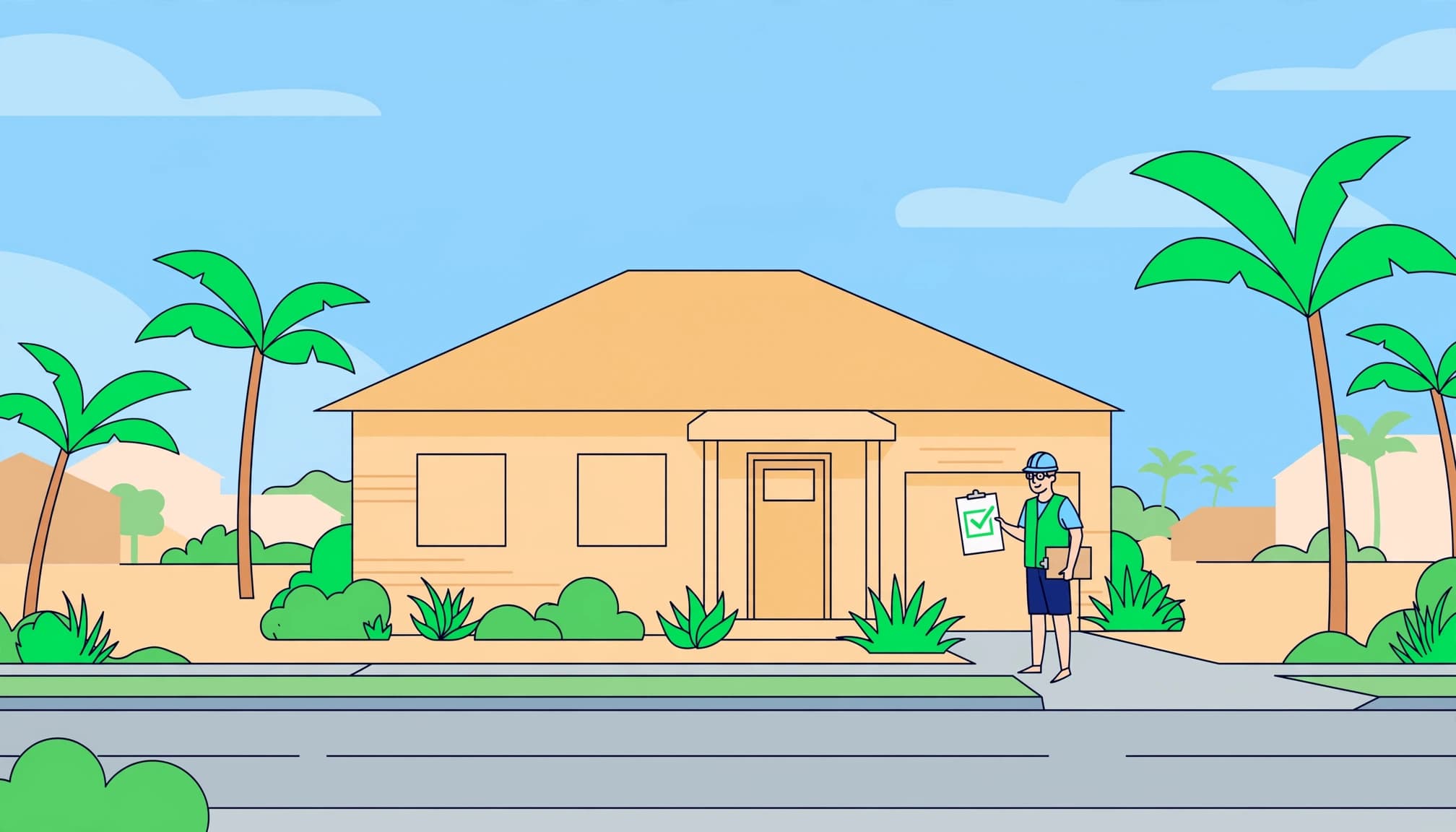
A Florida certificate of occupancy authorizes move-in after the local building department approves required inspections, documents, and fees. For a new home, a passing final inspection alone doesn’t authorize occupancy; the building official must issue the required certificate.
We recommend treating that issued document as a firm move-in requirement when buying or building in Southwest Florida. The checklist starts with completed construction and ends with documented approval, not a projected completion date.
Key Takeaways
- Required final inspections must show a passing result, and all trade sub-permits must reach final status.
- Flood-elevation records, engineering approvals, outstanding fees, and other local requirements can delay release after construction finishes.
- A certificate of occupancy, certificate of completion, and certificate of use approve different things; none automatically substitutes for another.
What a Florida Certificate of Occupancy Confirms
The Legal Move-In Requirement
A local building department issues a certificate of occupancy, commonly called a CO, for a new building, addition, or applicable renovated space. It documents that the approved work meets applicable Florida Building Code requirements and permits safe occupancy.
Section 111.1 prohibits using or occupying a building, or changing its occupancy classification, before the required CO is issued. A change of occupancy may also require approval under applicable code provisions. Temporary occupancy requires separate authorization.
For buyers, the distinction matters: keys, electrical service, and a completed walkthrough don’t establish legal occupancy.
What the Certificate Must Identify
Section 111.2 identifies 13 required certificate entries. These include the permit number, property address, owner’s name and address, and portion covered.
Other entries address the compliance statement, building official, code edition, occupancy classification, construction type, occupant load, sprinkler requirement, and special permit conditions. For flood-hazard properties, the certificate must also state that the authority has received and retains the required as-built documentation for the lowest floor elevation.
These details connect the approval to a particular property and approved use.
Pre-Move-In Checklist: Inspections and Permits
1. Complete the Work and Pass Required Finals
The Florida Building Code and approved building permit plans establish the construction requirements. Before the building final inspection, electrical, plumbing, and HVAC systems must be complete and operational.
Required safety features also need permanent installation. Missing handrails, unfinished fixtures, inaccessible equipment, or unresolved correction notices can prevent approval. Temporary arrangements don’t replace completed construction.
Inspectors need clear access, visible address numbers, required equipment labels, and applicable records. Site grading and drainage must also satisfy approved requirements.
Our guide to Florida final building inspections explains how this review differs from a buyer’s private inspection.
2. Final Trade Permits and Agency Approvals
Each required inspection must receive a pass disposition, and all trade sub-permits must be finaled. A passing building final doesn’t automatically resolve an open electrical, plumbing, or mechanical permit.
Other approvals may involve fire protection, fire-alarm or sprinkler system sign-offs, utility releases, septic systems, zoning, or driveway work. The property’s jurisdiction and approved scope determine the exact combination.
Osceola County illustrates why these approvals need separate attention. Its Fire Rescue building final must be requested through IVRS; the request isn’t automatic. Hydrants must be operational, approved, and properly painted.
For commercial projects there, subcontractor permits must reach final status. Threshold Buildings also require signed and sealed threshold reports on file before CO issuance. Those are Osceola procedures, not a universal Southwest Florida checklist.
Closeout Checklist: Documents and Fees
3. Submit Required Flood-Elevation Records
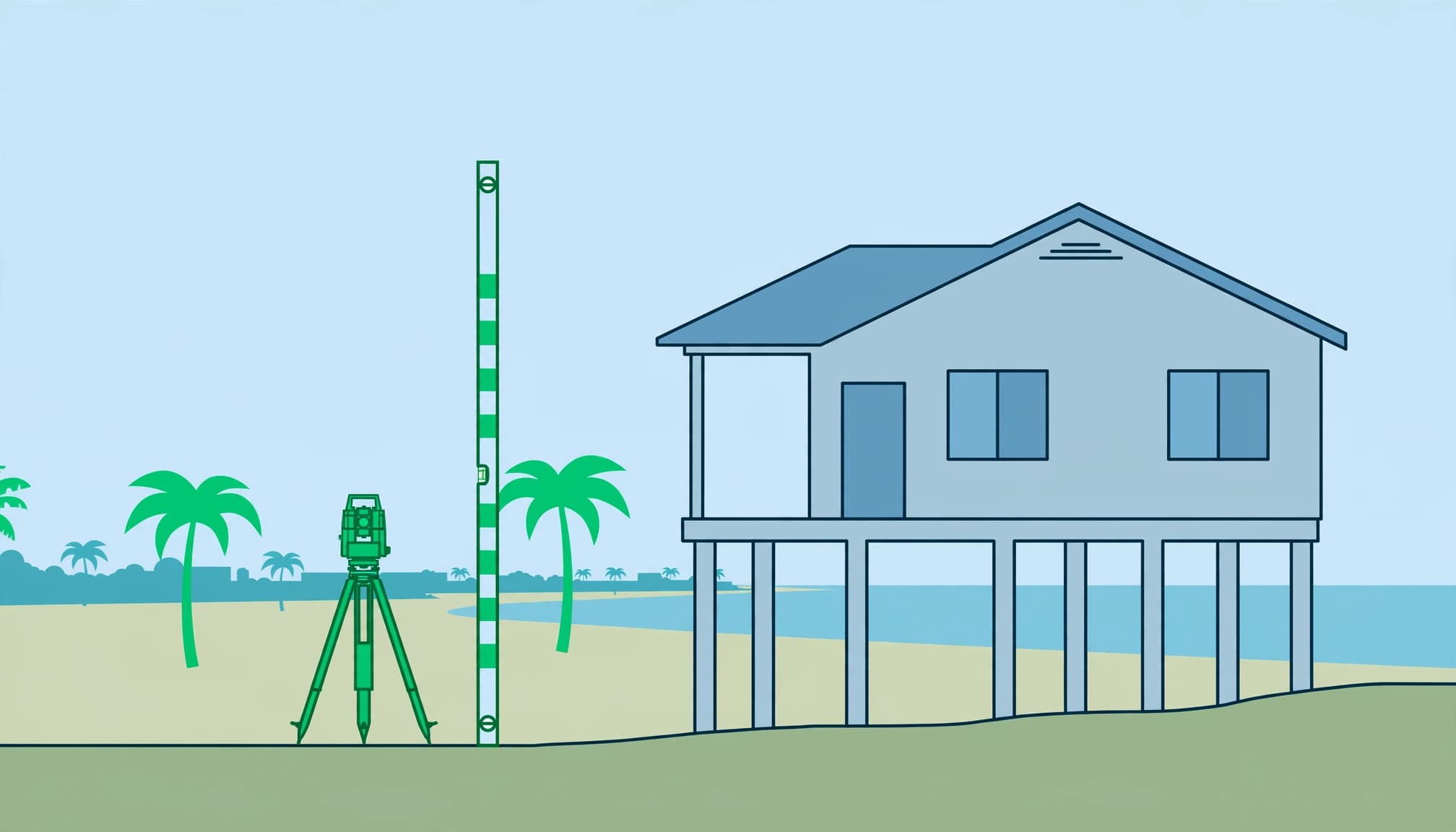
New homes in a flood hazard area commonly require a final elevation certificate before occupancy approval. The completed survey documents actual elevations rather than proposed design heights.
Section 111.2 requires the CO to state that the authority received and retains documentation of the as-built lowest-floor elevation. Local requirements determine the exact forms and supporting records.
For coastal buyers, these documents belong with the approved plans and inspection history. Our guidance on Florida flood-zone requirements explains how elevation documentation fits into construction approval.
4. Obtain As-Built and Engineering Approval
The City of Fort Myers requires a final as-built survey submission approved by the Engineering Division within Public Works before issuing the CO.
Depending on the project, closeout records may also include approved revisions, energy documents, termite certificates, contractor affidavits, and engineering reports. Submitting a document doesn’t establish approval; the reviewing department must accept it.
5. Clear Outstanding Fees
Fort Myers requires payment of job-related fees, including applicable Solid Waste Assessment fees.
Osceola lists impact fees for school, fire, park, and transportation charges, along with Fire Rescue and solid waste fees. Fire Rescue and solid waste fees aren’t assessed until the permit enters CO routing, so a previously paid balance may not cover the final amount.
We recommend keeping the final fee ledger with payment receipts. There isn’t one statewide CO price; permit-related charges and applicable assessments depend on the project and jurisdiction.
CO, CC, and CU: Which Approval Applies?
The certificate depends on the permitted work and intended use.
| Document | What It Approves | Typical Application |
|---|---|---|
| Certificate of Occupancy (CO) | Occupancy of approved space | New buildings, additions, applicable renovations, or occupancy changes |
| Certificate of Completion (CC) | Completion of permitted work | Standalone fences, windows, similar work, and shell buildings |
| Certificate of Use (CU) | A business use and its zoning compatibility | Business operations requiring local use approval |
A CC doesn’t authorize occupancy of an unfinished shell building. Fort Myers allows a CC for permits that don’t require a CO.
Miami-Dade’s CU process addresses whether a business is permitted in its zoning district and whether the structure has the proper CO. Businesses must obtain the CU before opening a business in unincorporated Miami-Dade.
For a homebuyer, the practical question is whether each project received the correct final approval, rather than whether every permit produced a CO.
Issuance Timing and Getting the Certificate
Allow Time After the Last Approval
A planning allowance of roughly 1 to 5 business days is useful after every requirement clears, but it isn’t a statewide deadline.
Osceola states 1 to 2 business days after processing the power call. Titusville requires at least three business days. Fort Myers says issuance usually takes a couple of business days after a passing building final.
However, missing documents, unpaid assessments, or another department’s pending approval can extend the schedule. The last inspection date isn’t necessarily the date the complete file becomes ready for release.
A passing final inspection and an issued CO are separate milestones. Schedule occupancy around the issued document.
Retrieve the Issued Record
Fort Myers provides CO copies through its EnerGov portal or its permitting office. The city also provides CO-release information at 239-321-7920.
For other Southwest Florida properties, permit searches belong with the city or county responsible for the address. A Fort Myers mailing address doesn’t necessarily place a property within city permitting jurisdiction.
Search using the address or permit number, then review the issued certificate alongside final inspection results and related permits. An application, permit receipt, or inspection screenshot isn’t the same document.
Temporary Occupancy and Homebuyer Protections
Temporary Occupancy Requires Express Approval
Florida’s code framework allows a temporary certificate of occupancy when the building official determines that the portion to be occupied is safe.
This approval can permit limited occupancy before every item under the permit is complete. However, it doesn’t excuse unresolved safety conditions or replace other required agency approvals.
The building official establishes the authorization’s conditions and validity. We recommend treating those written limits as part of the move-in plan. A contractor’s assurance that a home is almost finished doesn’t create temporary occupancy permission.
Keep Government Approval Separate From Contract Completion
A CO documents occupancy approval for the permitted scope. It doesn’t guarantee defect-free finishes, resolve every punch-list item, or replace an independent buyer’s inspection.
Likewise, contractual acceptance, final payment, and permit closeout remain separate matters. Our construction project closeout checklist covers warranties, operating information, and other handover records.
For a home purchase, retain the CO with approved changes and any written responsibility for unfinished work. An older home’s original CO also doesn’t document a later addition or conversion. Those improvements need their own applicable permit and closeout records.
Frequently Asked Questions
What Happens If the Final Inspection Fails?
The responsible contractor must address the written deficiencies and arrange the required reinspection. Some corrections require physical work; others need revised plans or supporting engineering documents.
Keep rejected work accessible and don’t conceal it before approval. Our guidance on resolving a failed building inspection explains the correction process. A failed final prevents the project from satisfying that inspection requirement for CO release.
Does a Small Project Need a CO?
A fence installation or window replacement generally receives a CC when the permit doesn’t require occupancy approval. Small scope doesn’t automatically mean no permit.
Structural alterations, roofing, electrical changes, plumbing work, and HVAC replacements commonly require permits or inspections. The applicable approval follows the permitted scope, not simply the project’s price.
What If a Closeout Fee Is Disputed?
A fee dispute doesn’t remove an unpaid closeout requirement. Request an itemized ledger and a written explanation of the assessment, then submit supporting records through the local review process.
Keep payment responsibility separate from the dispute itself. The construction agreement may assign a charge to the contractor or owner, but that allocation doesn’t clear the government’s outstanding balance.
Move In With the Approval in Hand
A Florida certificate of occupancy completes an important approval step: required inspections, records, and fees support the building official’s authorization to occupy.
We recommend keeping the issued CO with your permanent property records. It documents the approved property and use, while your contract and handover records address remaining obligations.
For help planning a Southwest Florida build or renovation, Get In Touch with our team.