

New concrete cracks in Florida because drying, heat, and restraint create stresses as the slab hardens. Hairline cracks from contraction are common, but widening cracks, uneven surfaces, and repeated cracking deserve closer attention.
We understand that a crack in a new driveway or foundation can raise concerns, especially when you’re buying a home. The most useful distinction is whether a concrete slab is moving, rather than whether a crack exists. Understanding the cause helps you protect your property and choose the right response.
Key Takeaways
- Hairline shrinkage cracks can develop during curing without indicating structural failure.
- Florida’s sun, high concrete temperatures, and drying winds increase the risk of early surface cracking.
- Widening cracks, vertical displacement, soil loss, or nearby building damage require professional assessment.
- Lasting repairs address drainage, soil support, and movement before covering the visible crack.
Why Florida Heat Affects Fresh Concrete
Concrete gains strength through hydration, a chemical reaction between cement and water. It needs controlled moisture and temperature during this process.
Hot Concrete and Excess Mixing Water
Hot weather accelerates setting and can increase water demand during placement. Adding unnecessary water makes concrete easier to place, but it can increase contraction and reduce strength.
For hot-weather work, concrete temperature matters more than air temperature alone. Mix proportions, water content, and curing remain important to the finished result.
Hydration also generates heat. Thick mass-concrete placements, around 18 inches or more, can experience thermal cracking when internal temperature differences reach 20°F or higher. Those conditions differ from a typical residential driveway, and that number isn’t a universal cracking threshold.
Rapid Evaporation and Plastic Shrinkage
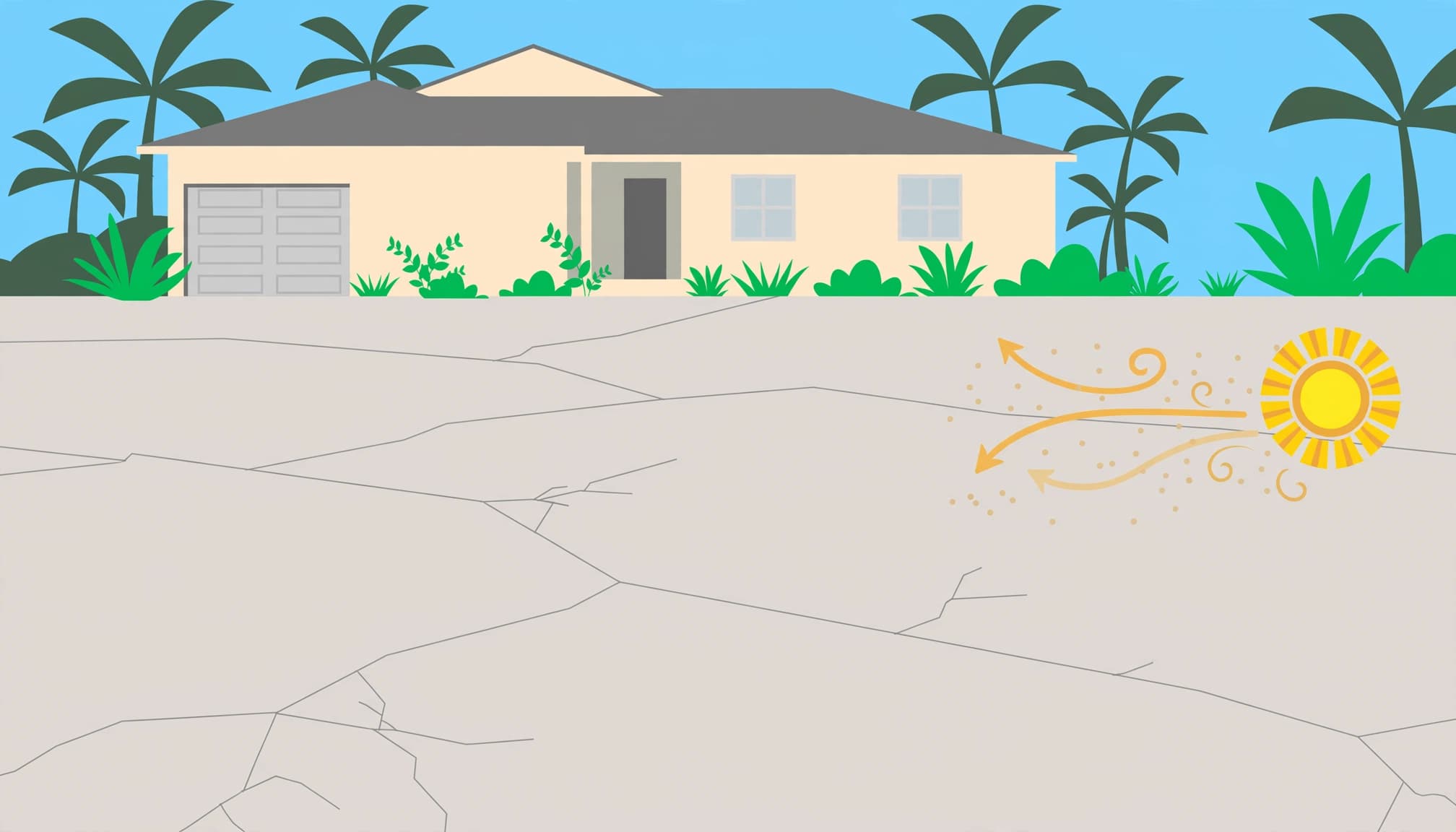
Plastic shrinkage cracking happens before concrete has fully hardened. Surface water evaporates faster than water can reach the surface, creating tension in the fresh material.
Florida weather can speed surface drying when concrete is hot, direct sunlight reaches the slab, and hot, dry wind crosses its surface. The Federal Highway Administration identifies these conditions in its guidance on early-age concrete cracking.
Rapid surface drying can cause early cracks, while inadequate curing is a separate installation issue. Early placement, wind protection, suitable mix adjustments, and prompt curing help reduce these risks.
Normal Shrinkage or a Warning Sign?
Assess cracks in concrete by considering their pattern, changes, and surrounding conditions together. A photograph alone can’t establish structural integrity.
Hairline Cracks During Curing
Concrete contracts as moisture leaves it. When that contraction is restrained, fine cracks can form in a new slab.
Drying shrinkage can continue after the initial curing period. The FHWA’s concrete curing guidance distinguishes this later process from cracking in fresh concrete.
A fine, stable crack with level edges may be cosmetic. However, “hairline” describes appearance, not a diagnosis. A crack in a driveway and a similar-looking crack in a load-bearing foundation need different consideration.
Movement and Related Damage
A widening crack, raised edge, or sunken section deserves professional review. Water entering the home or visible soil loss increases the concern.
Look beyond the concrete. Sticking doors, cracked tile, separated baseboards, and new wall cracks can accompany foundation movement.
A narrow crack with vertical displacement can deserve more attention than a wider crack whose edges remain level and stable.
Photograph the area with a ruler beside it and record the date. Document changes after heavy rain, nearby construction, or storms. Rapid movement or sudden depressions warrant prompt assessment rather than continued observation.
Settlement, Moisture, and Other Causes
Florida heat isn’t responsible for every cracked slab. The support beneath the concrete and the loads above it also matter.
Uneven Subgrade and Soil Washout
Loose fill, soft pockets, organic material, and inconsistent compaction can cause one section of a slab to settle differently.
Southwest Florida commonly has sandy soils, but individual properties vary. A smooth building pad doesn’t establish that the underlying material was properly prepared.
Cracks can let water seep beneath the slab. Water may soften susceptible material or wash supporting soil away, causing further settlement and cracking.
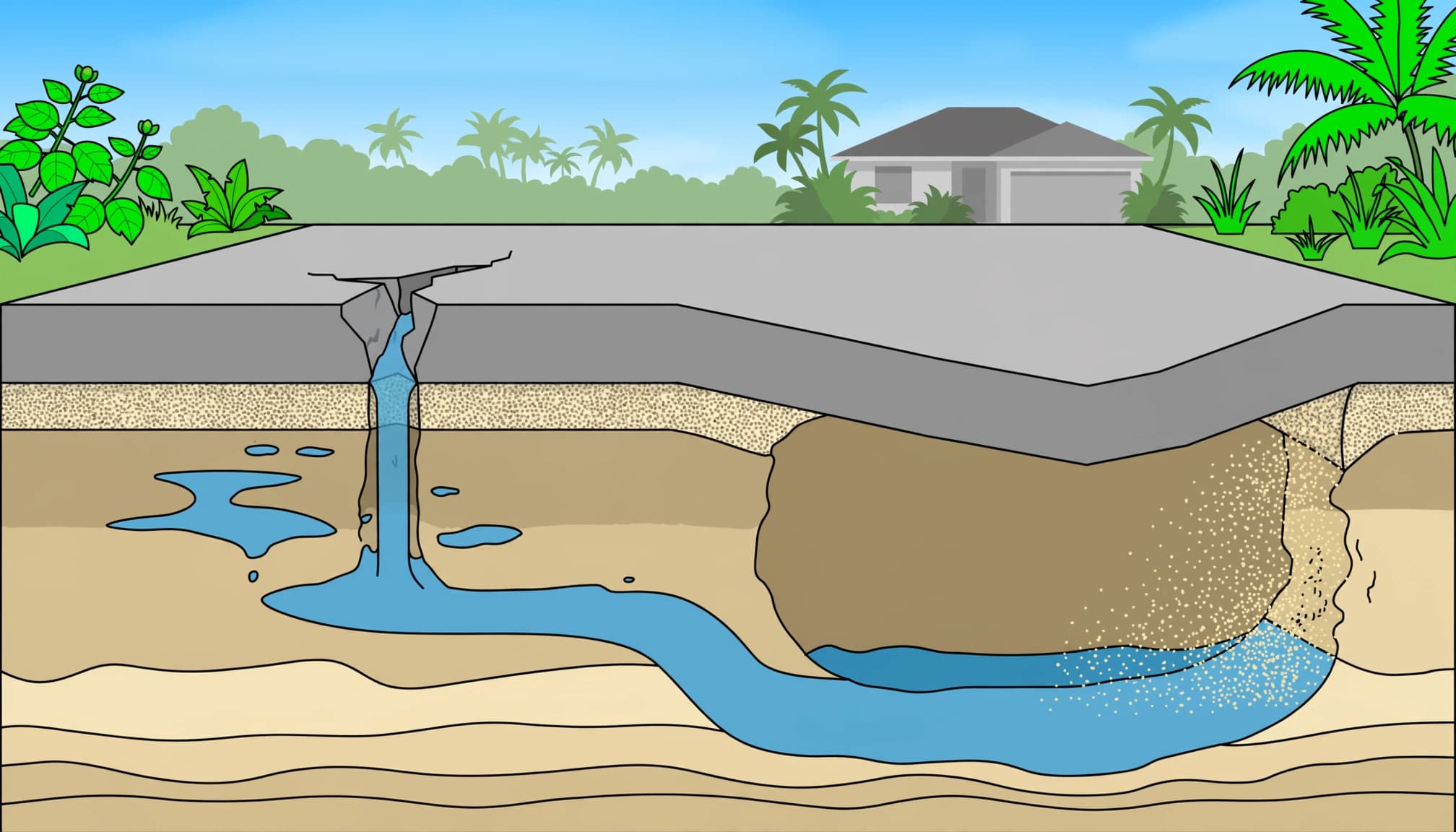
Near coastal homes, watch for fresh depressions, loose pavers, pool deck movement, and changes around seawalls. These conditions require site-specific evaluation. Our guide to coastal foundation conditions explains how soil, drainage, and flood exposure interact.
Heavy Loads and Freeze-Thaw Damage
A slab can crack when vehicles, equipment, or stored materials exceed its intended capacity. Unsupported edges are particularly vulnerable.
Freeze-thaw cycles are another recognized cause of concrete damage. Water expands as it freezes inside saturated concrete. This is a much less common explanation in Southwest Florida than contraction, drainage problems, or settlement.
The location and conditions should guide the diagnosis; a general list of causes shouldn’t replace an inspection.
Control Joints and Proper Curing
Control joints create planned locations for contraction cracks. Inadequate layout, depth, or timing can lead to random cracking instead of cracks following the intended lines.
The Portland Cement Association explains that joints help control contraction cracking as concrete hardens. They reduce random cracking but don’t eliminate concrete movement.
Control joints between exposed slabs should be sealed with a compatible material to limit water entry. Joint sealing also helps keep debris out. It doesn’t replace proper grading or drainage.
Urethane sealant can crack, bubble, or dry out over time. Surface preparation, water conditions, and movement affect performance. No sealant should be treated as permanent or maintenance-free.
Proper curing helps retain moisture while strength develops. Depending on the project, that may involve curing compounds, wet coverings, or another specified method.
We recommend addressing curing, joint layout, and drainage before placement begins. Once a slab has cracked, those original details also help explain what happened.
Concrete Crack Repair Options
The appropriate concrete repair depends on whether the crack is stable, moving, leaking, or associated with lost support.
These methods address different conditions.
| Repair Method | Appropriate Use | Main Limitation |
|---|---|---|
| Crack sealing | Limiting water entry through suitable nonstructural cracks | Doesn’t restore soil support |
| Epoxy or other injection | Selected cracks requiring bonding or leak control | Material must match movement and wet conditions |
| Resurfacing | Improving a sound slab’s worn or damaged surface | Active cracks can transfer through the new finish |
| Engineered reinforcement | Strengthening or reconstructing selected damaged areas | Requires a project-specific design |
The root cause determines the repair, not the appearance alone.
Crack injection with epoxy can bond suitable dormant cracks. Flexible injection materials may be used for certain leaking conditions, but sealing a leak doesn’t automatically restore structural capacity.
Resurfacing should follow necessary repairs. Covering an active crack without addressing movement often produces another visible crack.
Steel rebar or fibers can help control cracking in new or reconstructed concrete. They don’t prevent all cracking, and adding reinforcement isn’t a universal repair for an existing slab.
A temporary surface patch generally has a shorter service life than a properly designed professional repair. Preparation and root-cause correction matter more than the patch’s initial appearance.
A stable crack can remain repaired when the method matches the conditions. Repeated cracking at the same location calls for assessment of unresolved movement, moisture, or inadequate support.
What Homebuyers Should Request Before Repairs
Before purchasing a Southwest Florida home with cracked concrete, get a clear explanation of the affected area. The same document-review principles apply when evaluating a home in Orlando. A driveway repair and a foundation repair carry different responsibilities and costs.
Useful records include approved plans, inspection documents, previous repair descriptions, drainage information, and available soil or compaction reports. These records help establish what was built and what has changed.
We recommend a qualified structural engineer when cracking accompanies displacement or building movement. A geotechnical professional may be needed when settlement, unsuitable soil, or washout is suspected.
Some local contractors offer a free estimate after an on-site inspection. When searching for “crack repair near me,” check whether the provider distinguishes a sales estimate from an engineering evaluation. A sales inspection isn’t an engineering assessment when structural concerns are present.
Our structural concrete services begin with a detailed evaluation and cost estimate. The scope should identify preparation, reinforcement, placement, finishing, and any required inspections.
Clear repair documentation also helps buyers understand whether the source of damage was addressed before cosmetic finishes concealed it.
Frequently Asked Questions
Is It Normal for Concrete to Crack After Six Months?
A crack appearing after six months can result from continued drying shrinkage. Its age alone doesn’t establish whether it’s harmless.
We recommend judging changes in width, edge height, moisture, and nearby finishes. A new crack with settlement or related building damage deserves assessment, regardless of when the concrete was poured.
Can Correctly Installed Concrete Still Crack?
Yes. Concrete contracts, temperatures change, and restraint creates stress. Quality installation reduces avoidable cracking without guaranteeing a crack-free surface.
Florida’s humidity can slow evaporation, but dry, windy conditions can still occur. The American Concrete Institute’s hot-weather concrete resources distinguish hot, humid conditions from dry conditions that carry a greater risk of cracking before concrete sets.
Are Hairline Cracks in a New Foundation Normal?
Hairline cracks can occur in new foundations. They shouldn’t automatically be dismissed because they’re small.
The foundation’s design, crack location, movement, and surrounding conditions determine the response. Professional assessment is appropriate when structural performance is uncertain.
A Sound Repair Starts With the Cause
New concrete cracks don’t automatically mean a home was poorly built. What matters is whether the concrete remains supported, the crack is stable, and water is being managed.
We recommend cause-based repairs before resurfacing or cosmetic work. That approach protects both appearance and long-term performance.
For help with structural concrete, a new build, or a home project in Southwest Florida, Get In Touch.