

Few homeowners in Southwest Florida are short on ideas when their house no longer fits. The hard part is deciding whether this decision gives your family better value, comfort, and control.
A larger home may solve a crowded bedroom, missing office, or accessibility need. It may also bring a new mortgage, transaction expenses, changing interest rates, flood exposure, and a neighborhood you don’t know. An addition can protect your address, but construction can disrupt daily life for six to twelve months.
We recommend comparing the full cost and practical effect of both choices before you speak with a listing agent or sign a construction contract. Start with the need your next home must meet.
Key Takeaways
- Start with the actual problem. An addition may be the better choice when you need defined space, while relocation may make more sense when the lot, location, flood exposure, or overall property no longer fits.
- Compare total costs, not just the construction quote. Include design, permits, financing, temporary housing, storage, moving, closing costs, repairs, insurance, taxes, and possible interest-rate changes.
- Check feasibility before designing an addition. Review the foundation, structure, zoning, setbacks, flood maps, drainage, permits, utilities, and homeowners association restrictions with qualified professionals.
- Plan for daily disruption and long-term value. A major addition may affect your routine for six to twelve months, and the finished project should still preserve practical features such as yard space, parking, privacy, and resale appeal.
- Use both construction and real estate perspectives. A written feasibility review, net-sale analysis, and side-by-side decision sheet can help you choose between improving your current home and buying another property.
Home Addition vs Relocation: Start With the Real Question
Square footage is only one part of the choice. The better option depends on whether your current property still supports the life you want.
If the need is defined, an addition may provide the right solution. A new primary suite, home office, guest room, kitchen bump-out, accessible first-floor bathroom, or custom built-ins can improve daily function and add living space without giving up your address. You keep your established neighborhood, nearby services, favorite views, and connections with friends.
Relocation becomes more attractive when the problem affects the property itself. Perhaps you need a larger lot, a different school area, lower maintenance, better parking, a pool, or a home outside a flood-prone location. Building outward or upward won’t solve every property limitation.
Southwest Florida homeowners also need to consider seasonal use. A Cape Coral property may work well for your current household but lack space for visiting family. A Fort Myers or Naples home may have the right location but require major structural, electrical, plumbing, and exterior work before it functions properly.

Ask one direct question: Would more space solve the problem, or do you need a different property? That answer gives the rest of the comparison a clear direction.
Compare the Total Cost, Not the Construction Quote
An addition estimate is only one part of the financial picture. Relocation also has costs that don’t appear in the listing price.
| Factor | Addition | Relocation |
|---|---|---|
| Financing | Existing mortgage may remain in place; equity financing may fund part of the work | New mortgage, appraisal, lender fees, and possible rate increase |
| Project costs | Design, permits, demolition, construction, finishes, and utility upgrades | Closing costs, moving, storage, repairs, insurance, and property taxes |
| Disruption | Construction noise, limited access, temporary housing, and schedule changes | Packing, selling, buying, moving, and adjusting to a new location |
| Control | You choose the layout, finishes, and connection to the existing home | You accept the layout and condition of an available property |
| Long-term value | Value depends on neighborhood demand and whether the addition fits the home | Value depends on purchase price, location, condition, and future market conditions |
Published national estimates often place a general room addition near $42,622, although local costs vary widely. A second-story addition can reach $500 to $600 per square foot. A 500-square-foot upper level increases the home’s square footage. At those rates, the work suggests $250,000 to $300,000 before design, permits, stairs, structural reinforcement, finishes, short-term accommodation, or landscaping.
From a financial perspective, those figures are planning benchmarks, not a proposal. Southwest Florida conditions can raise construction costs through flood-related requirements, wind-rated materials, drainage work, concrete reinforcement, limited access, and long lead times.
Relocation requires a different calculation. Start with the likely sale price, then subtract the mortgage payoff, seller transaction fees, negotiated credits, repairs, staging, moving expenses, storage, and any overlap between homes. Next, add the buyer’s closing costs, inspection, appraisal, lender fees, immediate repairs, insurance, and property taxes.
Mortgage rates and changing interest rates affect whether replacing a favorable first mortgage is worthwhile. Freddie Mac’s weekly mortgage rate survey provides current 30-year fixed-rate averages. Your actual quote will depend on credit, income, loan size, points, property type, and lender terms.
Home equity may make an addition possible without replacing a favorable first mortgage. Some national estimates place average tappable equity near $181,000, but your usable amount depends on the home’s value, mortgage balance, lender limits, and income review. A HELOC can provide flexibility, while a home equity loan may offer a fixed payment. Both require careful review because the rate, fees, payment, and repayment period can change the total cost.
Check the Property Before Choosing an Addition
An addition begins with the existing structure, not the design sketch. Before choosing a second story or expanding the footprint, have the property reviewed by qualified design and construction professionals.
Second-story feasibility starts at the foundation
A second-story addition adds substantial weight. A structural engineer may need to review the foundation type, footing size, reinforcement, slab, load-bearing walls, roof structure, existing settlement, and connections between old and new construction.
Older homes may not have complete plans or records. Visible cracks don’t always reveal the structure’s full condition. A sound-looking foundation may still need reinforcement for the proposed loads. Ask for a written feasibility assessment before paying for detailed plans.
A second story can preserve your yard, but it requires stairs, roof removal, structural connections, and careful protection of the occupied space. A ground-level addition may be easier for aging in place, but it uses more land and may affect setbacks, drainage, parking, or outdoor living areas.
When the existing foundation needs work, the project may include concrete foundation and structural repair before the new room can be built. Local experience matters because framing, concrete, stucco, roofing, and interior systems must work together.
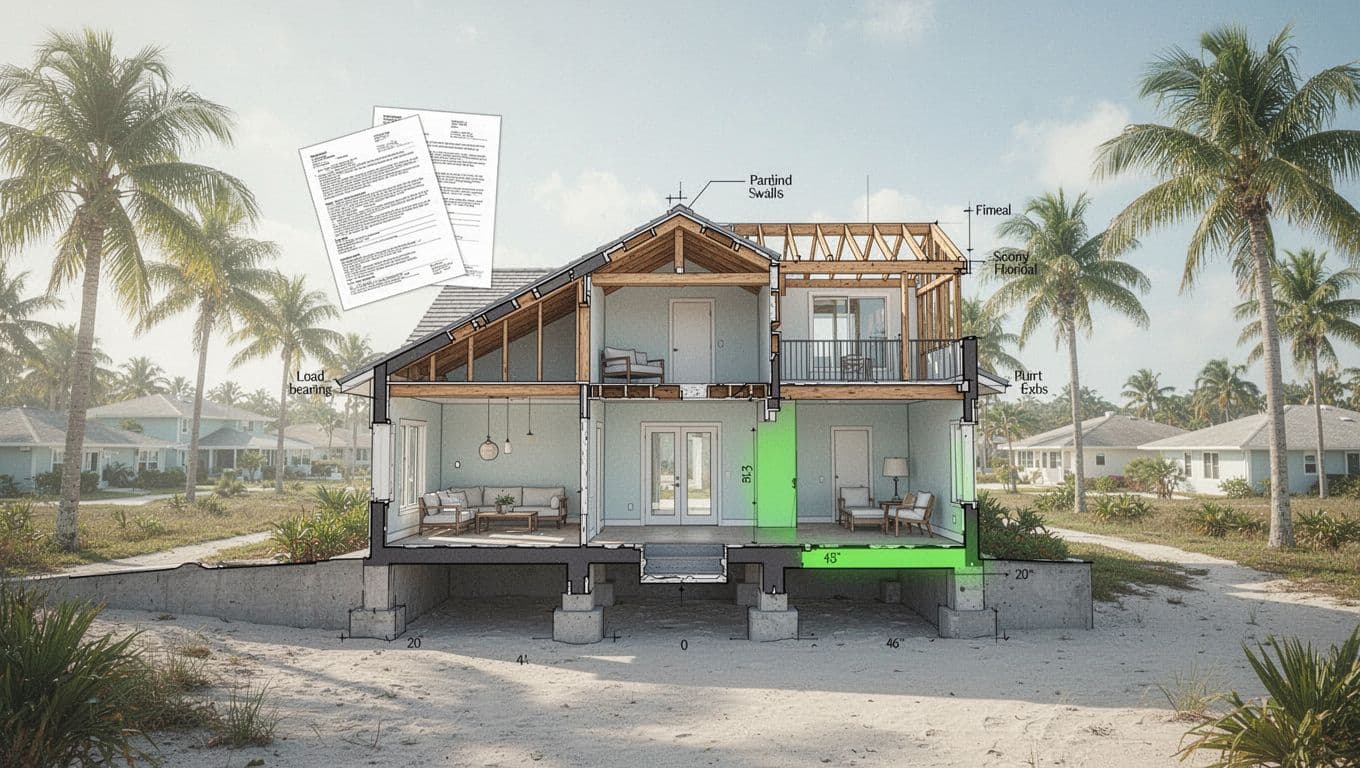
Permits, flood maps, and local rules
Zoning restrictions and permit requirements vary between Fort Myers, Cape Coral, Naples, Lee County, Collier County, and unincorporated areas. Setbacks, height limits, lot coverage, easements, drainage, historic rules, and homeowners association restrictions may affect what you can build.
The Florida Building Code resources provide the statewide code framework. Lee County’s residential construction guide explains that residential permits apply to additions and remodeling work, along with related trade work such as electrical and plumbing changes.
Cape Coral has its own permitting services division, while Fort Myers provides current permit applications and requirements. Naples and Collier County properties require their own local review.
Flood exposure must be checked by address, not guessed from the neighborhood. Use the FEMA Flood Map Service Center to review available flood hazard information, then confirm requirements with the local building department and design professionals. Elevation, drainage, wind protection, openings, and utility placement may affect the scope and price.
Unpermitted work can create problems during a sale, refinance, insurance renewal, or future claim. Ask for permit numbers, inspection records, and final closeout documents when reviewing an existing home.
Plan for the Months You Will Live Through
A major renovation changes daily routines. Six to twelve months may include dust, noise, temporary walls, material deliveries, utility shutoffs, and limited access to the kitchen, bathrooms, bedrooms, or garage.
Families with children need a safe route through the home and clear separation from construction areas. Pets may need boarding, secured rooms, or other arrangements when doors and exterior walls are open. Valuable furniture and personal items may also need off-site storage.
Temporary housing is only one hidden cost. Include extra meals, commuting, storage, cleaning, pet care, childcare, replacement appliances, temporary fencing, and possible rent overlap. If the work affects air conditioning or plumbing, the disruption can become more serious during Southwest Florida’s hot and humid months.
Review every proposal carefully. Confirm that it includes design, engineering, permits, inspections, demolition, disposal, protection of occupied spaces, finish carpentry, painting, utility upgrades, exterior repairs, and final cleanup.
The lowest bid often becomes expensive when it excludes the work required to connect the new space with the old house.
If the property has hurricane or water damage, inspect beyond visible finishes. Moisture behind stucco, damaged substrates, compromised framing, and concrete problems may remain hidden until demolition. When buying a previously damaged home, request:
- Insurance records and contractor invoices
- Permits and engineering documents
- Inspection reports
- Before-and-after photographs
Wind and flood claims may involve separate policies and coverage rules.
Know When Moving Is Financially Smarter
An addition usually fits better when you like the property, the neighborhood supports the investment, and the space problem is defined. Keeping a favorable first mortgage may also matter when interest rates are higher and replacing it would increase your monthly payment. The project should still leave enough yard, parking, privacy, and outdoor space to protect resale value.
Moving may make more financial sense when the required addition becomes too large or complex, and if a move means building a new home, review the custom home building costs in Fort Myers guide to budget the construction side. If you need several bedrooms, a new garage, major accessibility changes, upgraded systems, and a larger lot, compare the full addition budget with the net cost of buying a suitable home.
The Southwest Florida housing market offers more options than during the pandemic, but Fort Myers, Cape Coral, and Naples do not move as one market because neighborhood prices vary. Regional 2026 real estate market reports place housing inventory around 6.7 to 12 months, depending on the location, month, and property category. Verify the relevant local report before making a decision.
A real estate agent focuses on sale price, buyer demand, and available homes, while a contractor focuses on scope, materials, schedule, and construction feasibility. Neither perspective answers the entire question.
For a balanced financial perspective, use this process:
- Write down the exact problems the new space must solve, including storage, accessibility, bedrooms, parking, and outdoor use.
- Request a comparative market analysis and a written estimate of your likely net sale proceeds.
- Obtain a property feasibility review that covers structure, zoning, flood exposure, permits, utilities, and a complete project scope.
- Compare the addition’s construction costs with relocation costs, financing, disruption, insurance, and long-term fit in one written decision sheet.
A local general contractor with experience in remodeling, framing, structural concrete, exterior finishes, and storm-related work can help identify connected costs early. Review Southwest Florida remodeling and construction services before selecting a project partner.
Frequently Asked Questions
Is a home addition or relocation usually less expensive?
There is no universal answer because both choices include costs beyond the headline estimate. Compare the complete addition budget with selling expenses, moving, buyer closing costs, financing, repairs, insurance, and taxes for a new home.
How do I know whether my property can support a second-story addition?
A structural engineer should review the foundation, footings, slab, load-bearing walls, roof structure, settlement, and connections between the existing home and proposed addition. Obtain a written feasibility assessment before paying for detailed plans.
How long can a major home addition take in Southwest Florida?
A major renovation may disrupt the household for six to twelve months, depending on the scope, permitting, materials, inspections, and site conditions. Plan for temporary access issues, utility shutoffs, storage, alternative housing, and possible delays.
What Southwest Florida issues should I check before adding onto my home?
Review local zoning and permit requirements, setbacks, height limits, lot coverage, drainage, easements, homeowners association rules, and flood exposure. Fort Myers, Cape Coral, Naples, Lee County, Collier County, and unincorporated areas may have different requirements.
When does relocation make more sense than an addition?
Moving may be the stronger choice when you need a larger lot, several additional rooms, better parking, lower maintenance, a different school area, or a property outside a flood-prone location. It may also be preferable when the addition requires extensive structural, system, or exterior work that no longer fits your budget or daily life.
Conclusion
The right answer is not always the larger house or the lower estimate. It is the choice that solves your actual space problem while protecting your finances, daily routine, property value, and long-term plans.
If your current address still works, a carefully evaluated addition may provide the comfort and space you need. If the lot, structure, flood exposure, or total project cost no longer fits, relocation may offer a cleaner result.
For a practical review of your Southwest Florida property and options, Get In Touch with our team. Reliable planning, clear estimates, permitted work, and consistent communication provide a stronger foundation for either choice.