
A bathroom can look dated long before it stops working. A smart Fort Myers bathroom remodel improves daily comfort, supports your home’s value, and helps prevent expensive corrections after work begins.
For Southwest Florida buyers, the right plan matters as much as the finished tile or vanity; verify local requirements with the City of Fort Myers or Lee County, based on the property’s location. Before approving a design, review property condition, water exposure, older plumbing, hurricane history, budget, layout, humidity-resistant materials, ventilation, accessibility, scheduling, and permits.
Key Takeaways
- Investigate leaks, moisture, plumbing, electrical work, subfloor conditions, and prior storm repairs before selecting finishes or starting demolition.
- Build an itemized budget that separates repairs, labor, materials, allowances, permits, and contingency; planning ranges are not fixed quotes.
- Confirm permit requirements with the City of Fort Myers, Lee County, or the appropriate local jurisdiction, and document responsibility for applications, inspections, and permit closeout.
- Choose a practical layout and Florida-ready materials, with careful attention to ventilation, waterproofing, accessibility, storage, and slip resistance.
- Protect the project with a detailed contract, written change orders, realistic scheduling, clear payment milestones, and documented warranty terms.
Start With the Property, Not the Finish Selections
Beautiful finishes won’t solve an active leak, a soft subfloor, or outdated electrical work. Before starting a bathroom remodel, resolve those problems rather than covering them with cosmetic work. Before choosing statement tile or fixtures, review the conditions behind the walls and under the flooring.
Inspect Water, Plumbing, and Existing Surfaces
Look closely at grout cracks, stained baseboards, loose flooring, slow drains, soft drywall, and musty odors. These visible issues may point to concealed moisture, plumbing, electrical, or structural problems. Separate surface damage from conditions that require investigation before demolition.
Older Fort Myers homes may also have corroded piping, aging shutoff valves, uneven slabs, or limited ventilation. For Fort Myers properties, inspect prior storm-related repairs for concealed moisture or structural damage. Document existing conditions with photos before demolition. This record helps separate pre-existing damage from new construction work.
If you’re buying a home, review permit history and inspection records before purchase. Before demolition, confirm that permits are closed and prior work is properly documented. Request repair invoices and any available insurance claim documents. Unclosed or unpermitted work can complicate resale, refinancing, insurance renewals, and future repairs.
Define What the Bathroom Must Do
A good bathroom design starts with the property’s condition and daily function. Think about who will use the room, how long you expect to own the home, and whether it should support aging in place.
A guest bathroom may need durable surfaces and simple storage. A primary bath may need a walk-in shower, double vanity, improved lighting, and better circulation. An accessible bathroom may need a low-threshold entry, blocking for grab bars, and clear floor space. Lever handles, good lighting, and slip-resistant surfaces also support safer use, so plan these decisions before tile and wall finishes are installed.
Write down your priorities before the design consultation. Separate them into three groups:
- Non-negotiable repairs, such as plumbing corrections, waterproofing, ventilation, or electrical safety.
- Functional upgrades, such as a walk-in shower, storage, lighting, and accessibility features.
- Optional finishes, such as premium fixtures, specialty tile, and custom glass.
This list keeps the project focused when selections begin to affect the budget.
Set a Realistic Bathroom Remodeling Budget in Fort Myers
Cost depends on room size, layout changes, finish selections, permit scope, and existing-home conditions. Bathroom remodeling costs vary because each project combines different decisions that should be visible in the estimate.
Use Planning Ranges Before Requesting Bids
Current local planning ranges place a cosmetic refresh around $3,000 to $8,000. A mid-range renovation often falls between $10,000 and $30,000. A full bathroom remodel can reach $25,000 to $80,000 or more.
These are planning ranges, not fixed quotes. Plumbing relocation, electrical changes, concealed moisture, and subfloor repairs can materially change the final price.
Use this simple structure when reviewing your budget:
| Budget Area | Typical Items to Review | Owner Question |
|---|---|---|
| Demolition | Removal, surface protection, and dust control | Is demolition complete? |
| Disposal | Hauling, dump fees, and final cleanup | Are disposal costs included? |
| Labor and trade work | Plumbing, electrical, drywall, tile, and painting | Are all required trades included? |
| Materials and finishes | Vanity, fixtures, tile, glass, flooring, and lighting | Which selections are allowances? |
| Waterproofing | Shower pan, membrane, sealing, and testing | Is the waterproofing scope documented? |
| Administrative costs | Permit application and inspections, plan review, and design | Are fees included or separate? |
| Contingency | Moisture, subfloor repair, framing, and old piping | Who approves concealed-condition change orders? |
The lowest proposal is not always the lower-cost project. One estimate may include permit application and inspections, disposal, waterproofing, and fixtures. Another may list those items as exclusions.
Adjacent flooring, drywall repairs, or whole-home work can also affect a home remodeling budget. A free estimate is only useful when it identifies the scope, allowances, exclusions, permit requirements, and assumptions about unknown conditions.
Treat Allowances and Contingency Separately
An allowance is a placeholder for a product or task that is not fully selected or measured. If the estimate includes a $4,000 tile allowance and your selection costs $5,500, you’re responsible for the $1,500 difference.
A contingency is different. It addresses identified uncertainty, such as concealed water damage or an uneven subfloor. The contract should state who controls that amount and how its use is approved. Ask who approves concealed-condition change orders before work begins.
A clear allowance has a dollar amount and a defined purpose. A vague allowance creates room for surprise charges.
Confirm Permits, Licensing, and Insurance
Bathroom work can involve more than finishes. Plumbing relocation, new circuits, vent changes, structural modifications, and shower conversions may require a permit and inspection.
Assign Permit Responsibility in Writing
Permit requirements depend on the scope and property jurisdiction. Processes may differ between the City of Fort Myers, unincorporated Lee County, and nearby municipalities. Cosmetic updates are treated differently from work involving plumbing, electrical, mechanical, or structural changes.
Before work begins, verify current requirements with the appropriate city or county permitting authority. Your agreement should identify who prepares permit applications, pays fees, schedules inspections, answers correction notices, and closes the permit. If a general contractor coordinates trade scheduling, that responsibility should be clear.
Ask for permit numbers once work is underway, then keep inspection records with your project file. We recommend confirming requirements early. A bathroom that appears simple on a design board can become more involved when walls open or fixtures move.
Verify the Contractor and Every Trade
Florida’s Construction Industry Licensing Board regulates construction licensing. Active licensees must maintain required insurance, including liability coverage and workers’ compensation coverage or a valid exemption.
Ask for current licensing and insurance information before signing. Evaluate license status, insurance documentation, references, customer reviews, and the written contract. Verify that the business information matches across the contract, invoices, insurance certificate, and license records. Also ask whether the company uses in-house crews, subcontractors, or both.
Subcontractors are not automatically a concern. What matters is accountability for their work. You should know who manages scheduling, quality control, cleanup, inspections, and follow-up issues after the project is complete.

Choose a Layout That Fits Daily Life
A good layout makes a small Fort Myers bathroom feel more useful without forcing major structural work. Keep plumbing locations where possible if budget control is a priority. Moving drains, supply lines, and electrical circuits can affect cost and schedule, and may require permits.
Decide Between a Tub, Shower, or Combination
A tub-to-shower conversion is one of the most common upgrades in Southwest Florida. It can improve access, reduce cleaning, and open the room visually. Some acrylic shower systems can be installed quickly when the existing space, plumbing, and substrate are suitable.
A “one-day” shower remodel usually covers a limited replacement scope. A broader project may involve hidden moisture, demolition, waterproofing, plumbing relocation, substrate repair, tile, glass, and inspections. That broader shower project isn’t the same as a full bathroom remodel.
If the home has only one bathtub, consider resale before removing it or choosing a walk-in shower. Buyers with young children may value one tub, while primary-bath owners may prefer a larger shower. A walk-in bathtub may suit users who need easier entry but prefer bathing. It may require more space, installation planning, and maintenance than a shower.
Plan for Storage, Light, and Ventilation
Thoughtful bathroom design accounts for circulation, storage, lighting, and fixture placement. Use drawers, niches, medicine cabinets, and linen storage, with lights at the mirror and shower, not only overhead. For an accessible bathroom, plan clearances, grab-bar backing, shower controls, seating, and slip resistance from the start.
Ventilation deserves careful attention in Florida’s humidity. Use an exhaust fan sized for the room, vented outdoors, with a suitable timer or control. It should never discharge into an attic or wall cavity. This helps remove moisture after showers, protect finishes, and support indoor comfort.
Choose fixtures that can be serviced locally. A rare valve or specialty trim may look attractive, but replacement parts shouldn’t become a future maintenance problem.
Select Products Built for Florida Conditions
In Fort Myers, bathrooms face humidity, daily moisture, sand, and frequent cleaning. Materials should offer more than a polished appearance. They should handle regular use without becoming difficult to maintain.
Compare Tile and Waterproof SPC Flooring
Porcelain tile flooring is a proven bathroom choice. It is durable, water-resistant, and available in a wide range of sizes and finishes. Proper substrate preparation, waterproofing, grout selection, and installation quality remain important.
Stone plastic composite, or SPC, flooring can also be practical for a bathroom renovation. A product marketed as waterproof flooring still needs proper substrate preparation, perimeter detailing, transitions, and manufacturer-approved installation. Confirm its suitability for wet areas in the product documentation.
SPC isn’t a shortcut around preparation. The installation process depends on a subfloor that is sound, dry, and level. Confirm wet-area suitability in the product documentation, then review the manufacturer’s instructions before selecting these materials. Review the product warranty for wet-area limitations, installation requirements, and approved underlayment or transition details.
Select Finishes That Stay Practical
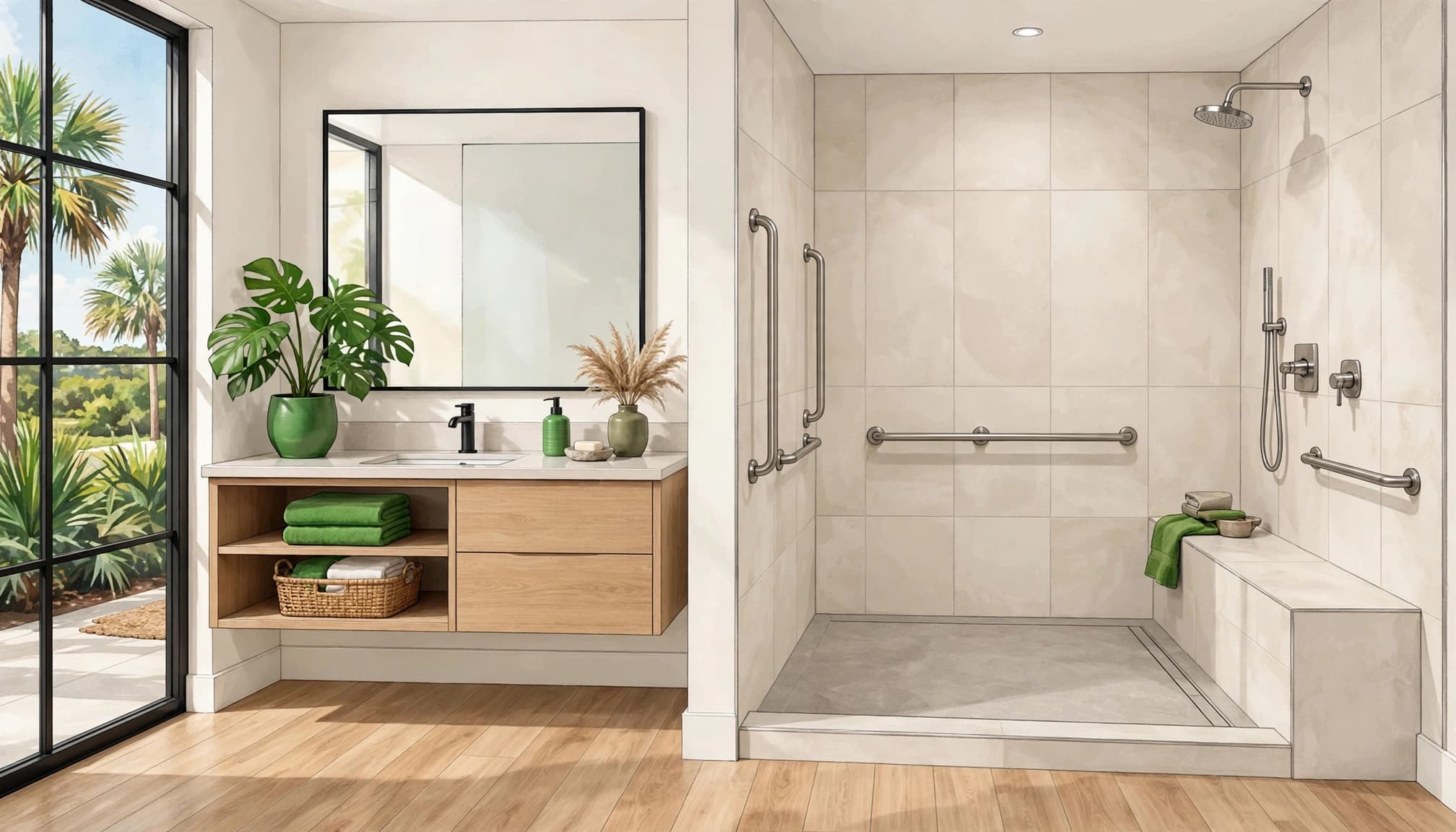
Matte finishes can hide water spots better than high-polish surfaces. Large-format tile may reduce grout lines, but it requires a flat substrate and skilled installation. Slip resistance matters on bathroom floors, especially near a shower entry.
We recommend selecting the actual vanity, tile, flooring, fixtures, and shower glass before demolition whenever possible. A showroom is one optional place to inspect those samples before ordering. Early selections confirm lead times, prevent allowance overages, and keep the schedule moving.
Coordinate samples, measurements, product availability, and manufacturer requirements before demolition.
Build a Schedule Around the Actual Scope
A cosmetic bathroom refresh may take three to five days. Mid-range work commonly requires two to four weeks. A full bathroom remodel with custom tile, layout changes, inspections, or concealed repairs may take four to ten weeks. Treat these as planning ranges, not promises, because existing conditions can change the schedule.
Account for Selections, Permits, and Lead Times
Construction should not begin until the key decisions are made. Confirm measurements, product availability, the permit review schedule, inspection requirements, and access to the home before scheduling demolition.
Custom vanities, shower glass, specialty tile, and certain fixtures can take longer than expected. An accessible bathroom may require custom grab-bar backing, wider clearances, shower seating, or specialty fixtures. Made-to-order components can affect lead times, so ask your contractor about the critical path and approved alternates.
A project schedule should include demolition, rough plumbing and electrical, and the required inspection. It should then cover waterproofing, tile or flooring installation, trim-out, punch-list work, and final cleanup. Ask how weather events, material delays, or office closures could affect the completion date.
Protect Your Home During Construction
If you are living in the home, ask how long bathroom access will be limited and when temporary water shutoffs will occur. Plan for noise and dust, and keep pets and children away from active work areas. The construction crew should protect adjacent flooring, furniture, stored materials, and incomplete waterproofing from rain, humidity, and tropical-storm threats.
Southwest Florida weather deserves a contract discussion as well. Ask who is responsible for hurricane preparation, stored materials, and protecting incomplete work if a tropical storm threatens the area.
Review the Contract, Payment Terms, and Warranty
The contract should match your actual bathroom remodeling project, not a generic service description. It should list the scope, drawings or selections, contract price, payment schedule, exclusions, allowances, permits, cleanup, and coverage terms.
Require Written Changes Before Added Work Starts
Concealed conditions can surface during a bathroom remodel. Hidden moisture, damaged framing, outdated wiring, and plumbing issues can require changes. Document those conditions before the budget changes.
Every change order should describe the reason, affected work, material or labor costs, tax or fee impact, and schedule effect. It should also include your written approval before work proceeds.
Payments should follow visible progress, delivered materials, passed inspections, or defined milestones. Before final payment, confirm the punch list is complete, required inspections have passed, and closeout documents are provided.
Compare Financing and Warranty Terms
Cash, a home equity loan, a HELOC, and a personal loan are common financing options for a renovation. A HELOC may offer flexibility for a staged project, but its rate and payment can change. A personal loan may offer a fixed payment without using the home as collateral.
Compare the interest rate, fees, loan term, monthly payment, and prepayment conditions. Finalize the project scope and obtain an itemized estimate before borrowing.
Ask for the workmanship warranty duration, start date, exclusions, and response process. Confirm manufacturer warranty coverage for fixtures, flooring, shower systems, and waterproofing, including flooring limitations and fixture exclusions.
Frequently Asked Questions
How much does a bathroom remodel cost in Fort Myers?
Planning ranges vary from about $3,000 to $8,000 for a cosmetic refresh, $10,000 to $30,000 for a mid-range renovation, and $25,000 to $80,000 or more for a full remodel. Plumbing relocation, concealed moisture, electrical changes, and subfloor repairs can materially affect the final cost.
Does a Fort Myers bathroom remodel require a permit?
Permit requirements depend on the work and whether the property is in the City of Fort Myers, unincorporated Lee County, or another municipality. Verify current requirements with the appropriate permitting authority and identify in writing who handles applications, fees, inspections, correction notices, and permit closeout.
How long does a bathroom remodel take?
A cosmetic refresh may take three to five days, while mid-range work commonly takes two to four weeks. A full remodel with custom tile, layout changes, inspections, or concealed repairs may require four to ten weeks, depending on selections, lead times, and existing conditions.
What materials work well in a Fort Myers bathroom?
Porcelain tile is a durable, water-resistant option, while SPC flooring may be suitable when the product is approved for wet areas and installed over a sound, dry, level substrate. Regardless of the finish, proper waterproofing, ventilation, grout selection, and manufacturer-approved installation remain important.
How can homeowners avoid unexpected remodeling costs?
Inspect the property before demolition and request an itemized estimate that identifies allowances, exclusions, permit costs, and contingency. Require written change orders that explain concealed conditions, added costs, and schedule effects before additional work begins.
A Better Bathroom Starts With a Better Plan
The strongest Fort Myers bathroom remodel starts with clear priorities and a plan for the property, budget, layout, and responsibilities. Investigate water and structural conditions first, then document the decisions that will guide the work.
Set an itemized budget, choose a practical layout, and select materials suited to Florida humidity. Plan ventilation and accessibility, confirm City of Fort Myers or Lee County requirements, and document scheduling, warranty, and storm protection responsibilities. Before work begins, verify current rules, contract terms, insurance, and product requirements.