
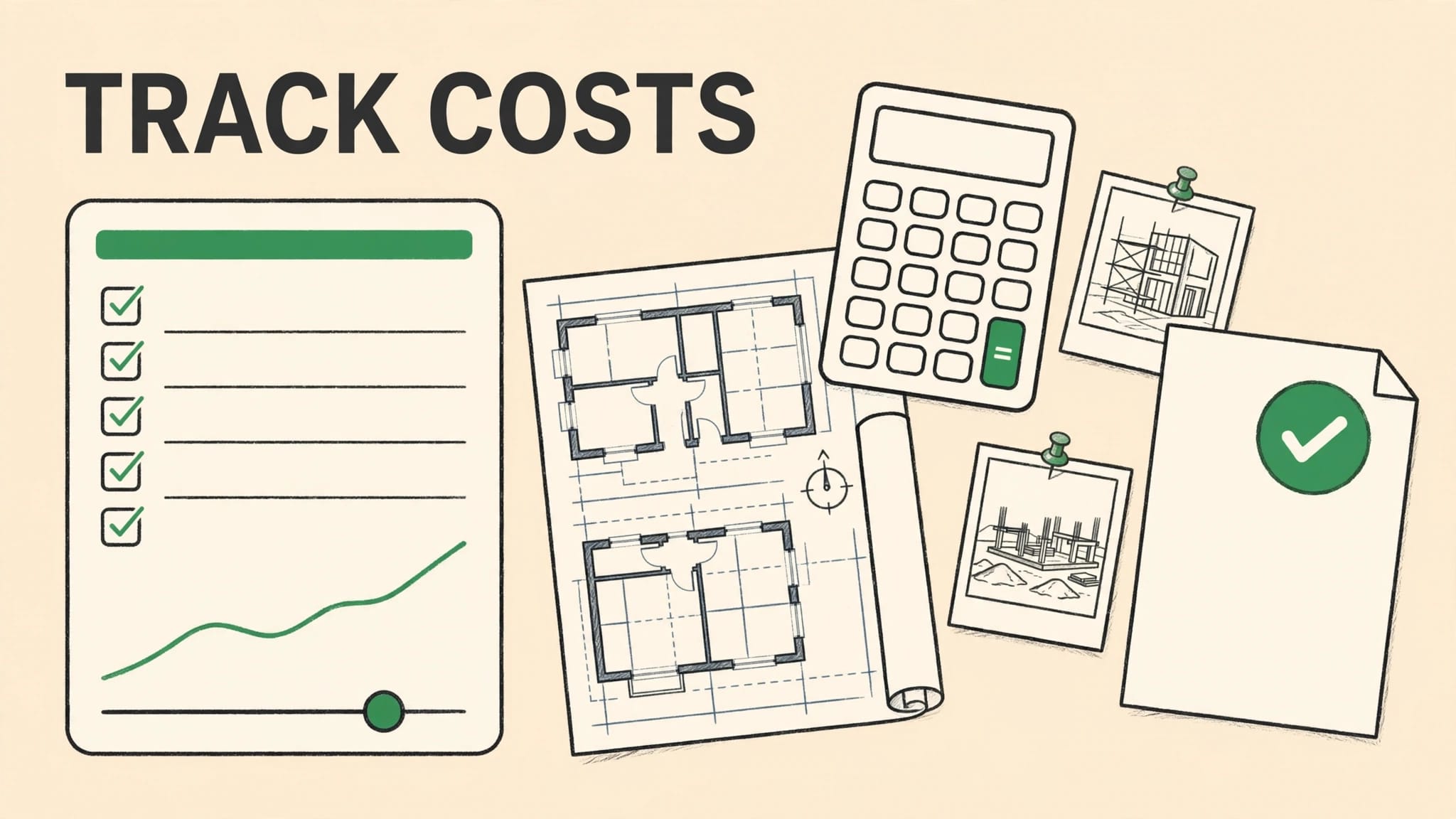
A small change can become an expensive problem when it isn’t recorded immediately. As a project owner, you may face hidden conditions, permit comments, product changes, and owner decisions during a remodel or new build.
Construction change orders give you a clear written record before added work moves forward. When the process is organized, you can see the reason, cost, timeline effect, and approval status without guessing.
The goal isn’t to avoid every change. It’s to identify and control each one early, before it creates cost overruns or affects your budget, project schedule, or working relationship.
Key Takeaways
- Establish a complete baseline of plans, specifications, allowances, exclusions, selections, permits, and site assumptions before construction begins.
- Document potential scope changes the same day with photos, field notes, affected trades, supporting documents, and the person responsible for the decision.
- Use one change order log to track each request from identification through pricing, approval, completion, and final reconciliation.
- Price the full effect of a change, including labor, materials, subcontractors, fees, schedule impacts, and any contractually required overhead and profit.
- Send only approved, signed changes to the field and confirm that the final contract balance, inspections, warranties, invoices, and lien waivers are complete before final payment.
What Construction Change Orders Actually Control
A construction change order is a written amendment to the original contract. It documents a change to the scope of work, contract value, completion timing, or all three.
This is more than a revised invoice. It connects a field condition or owner decision to the construction contract. ConstructConnect’s overview of the change-order process explains that changes often begin with site conditions, design issues, or owner requests.
Scope Changes Need a Clear Description
“Update bathroom” isn’t enough. A strong change order identifies the exact work, location, products, and installation requirements.
For a selection change, list the brand, model, size, finish, and any related labor. This prevents confusion over substitutions later. If a new vanity changes plumbing locations, tile layout, electrical work, or delivery timing, those related items should appear in the same record.
Added work is not the only reason to issue a change order. A deductive change order can reduce the price when work or materials are removed from the approved scope.
A Field Conversation Is Not Approval
A project owner may discuss an idea during a walk-through. A subcontractor may identify an issue while opening a wall. Those discussions matter, but they aren’t authorization to begin work outside the contract.
A change order request can start the approval process. An approved, signed change order closes it by confirming what will happen, what it will cost, and how it affects completion.
A construction change directive may authorize work before final pricing, but only when the construction contract permits that procedure. It should identify the affected work, interim cost method, approval authority, and documentation requirements.
A verbal agreement can be forgotten. A dated, signed written agreement gives every party one version of the facts.
Establish the Baseline Before Construction Begins
The best cost control begins before demolition, excavation, or framing. You can’t accurately track later construction change orders if the original scope is incomplete. Later changes are measured against the approved baseline, so missing details weaken cost control from the start.
Before work begins, confirm the baseline includes:
- Plans and specifications
- Finish selections, allowances, and exclusions
- Permits and inspections
- Site assumptions, drainage, utility work, and storm-rated components
- Known risks inside an existing home for renovations
That approved baseline supports the original contract and gives you a clear reference for later decisions.
Compare Scope, Not the Bottom-Line Price
Two proposals can have different totals while appearing to cover the same project. One may include disposal, permit coordination, inspections, taxes, or site protection. Another may leave those costs outside the contract.
We recommend reviewing every estimate line by line. Match the plans, quantities, exclusions, allowances, and assumptions to the scope of work before comparing totals. This creates a dependable control estimate before the construction contract is signed.
For a custom home, our residential and commercial new construction services follow the same principle. Project details must be clear before final pricing can be trusted.
Keep Selections and Procurement Dates Visible
Late selections often lead to rushed decisions, material substitutions, or added labor. Cabinets, windows, doors, appliances, tile, lighting, and specialty fixtures should have decision dates tied to the project schedule.
An allowance is a placeholder, not a guaranteed final price. Incomplete allowances or late selections can create avoidable cost overruns. If you choose a product above the allowance, the difference should be documented before it is ordered or installed.

Photo by Thirdman
Catch Scope Changes Before They Become Cost Overruns
Many changes involve unforeseen conditions, but not every concealed issue automatically supports extra compensation. Existing homes can reveal water damage, obsolete systems, structural deficiencies, or uneven subfloors after demolition. New sites can expose drainage issues, utility conflicts, permit comments, or design errors.
The cost increases when the issue sits unresolved.
Document Differing Conditions the Same Day
Record each potential change the same day with a short field entry:
- Date and time of discovery
- Exact location and affected trade
- Dated photos and a concise field description
- Relevant plan detail, specification, or approved scope of work
- Work stopped or threatened by the condition
- Preliminary quantity, when it can be estimated
- Person who must decide before work proceeds
- Supporting documentation that connects the photos, notes, and referenced documents
Compare the condition with the plans, specifications, and approved scope of work. If it falls outside that scope, send a change order request for pricing and review before authorizing corrective work. This record gives construction change orders a clear path from field discovery to formal documentation.
For structural items, such as a revised footing, concrete repair, or added reinforcement, pricing should explain the labor, materials, equipment, inspection needs, and schedule impact. Our structural concrete construction services follow detailed evaluation and accurate pricing because structural work should never rely on assumptions.
Separate Repairs From Elective Upgrades
This distinction matters on insurance-funded restoration projects and home renovations. The owner should see separate pricing when an elective improvement is added to a restoration repair.
Replacing damaged flooring is one scope. Expanding the room layout or selecting premium flooring is a separate owner-funded improvement.
Keeping those decisions separate protects the budget and gives you cleaner records for insurance discussions. It also prevents a necessary repair from becoming an unclear combination of repair costs and personal upgrades.

Build a Reliable Change Order Tracking Process
Construction change orders work best when they follow one consistent path. A text message, an email, and a handwritten note should not become three separate records for the same issue.
Use a single change order log that the project manager maintains from initial issue identification through closeout. Enter the first change order request as one row, with links to photos, pricing, approvals, revised drawings, and completion evidence. Project management software is optional, but it can preserve the same audit trail.
Assign Every Change a Number and Status
Give each potential change a unique identification number. Record the source, date, description, affected location, responsible party, and triggering document.
Required fields include the ID, source, date, location, description, affected trade, cost status, schedule status, approval authority, and closeout date.
A practical status system is simple:
- Pending review means the team is confirming scope, quantities, and field conditions.
- Priced means labor, materials, subcontractor costs, taxes, fees, and effects on the project schedule are documented.
- Approved means the responsible party has signed the change order.
- Closed means the work is complete and the final adjustment has been recorded.
Record any approved extension or reduction in contract time in the log. The log should show the starting contract amount, each approved adjustment, and the current contract value. It should also distinguish an additive change order from credits or deletions. That running total gives you a real-time view of the budget.
Price the Full Effect, Not One Trade’s Invoice
The direct cost is only part of the change. A complete proposal may include labor, materials, subcontractor costs, equipment, delivery charges, disposal, taxes, permit fees, engineering fees, and documented productivity costs.
Overhead and profit should follow the signed contract terms. There is no universal markup that fits every project. The right approach is transparent pricing that shows the cost basis and applies the agreed calculation consistently.
JRCPA’s change-order management guidance also recommends defining in the contract how pricing and schedule effects will be calculated. That conversation belongs at the start of the project, not during a dispute.

Submit a Change Order That Can Be Approved
A fast approval depends on complete information. The owner should not have to search through emails, invoices, and drawings to understand one proposed change.
After a field discovery or owner decision, submit a change order request. Verify the scope, price the work, review the schedule, and attach supporting documentation. The authorized party then approves it, and the approved record goes to the field.
Use the construction contract’s notice and approval procedure. If the contract requires a certain form, signature path, or response period, follow it every time. For example, the project owner may approve the change. The contract may instead assign authority to an owner representative, construction manager, or another designated party.
Include the Details That Support a Decision
Each change order should state the reason, the added or deleted work, and the revised project total. Describe the before-and-after scope of work clearly. Include photos, drawings, supplier quotes, subcontractor proposals, and any permit or inspection comments that support the request.
Show the schedule impact in plain language. A revised window opening may affect framing, window ordering, exterior finishes, inspections, and final completion. State any change to contract time, the completion date, or allowed duration. If none changes, say so.
Procore’s explanation of construction change orders notes that correct documentation can reduce risk and improve the chance of prompt approval.
Urgent work may require a construction change directive. Use this route only when the governing contract permits it and the authorized party issues the instruction. Identify the work, interim pricing method, daily records, and later reconciliation in the record. A directive does not replace final approval or a complete record.
Use the Required Form and Keep the Signed Copy
Some projects use standardized documents, including the AIA G701 Change Order or ConsensusDocs forms. SmartPM identifies AIA G701 and ConsensusDocs 202/795 as common options.
The form matters less than the completeness of the record and the contract requirement. Store the signed version with the updated estimate, revised plans, selection log, and correspondence. It records the approved contract modifications and updates the agreement. Everyone should be reviewing the same approved document.
Keep Communication Clear Across Every Trade
Construction change orders often affect multiple trades, so they need a clear communication process. Moving a wall can affect framing, electrical, plumbing, HVAC, drywall, flooring, trim, and paint. If one trade receives incomplete information, the project can lose time and money.
A designated project manager receives requests, confirms affected trades, updates the project schedule, obtains approval, and distributes the final scope. The project manager should send documented decisions and approved changes to the project owner and other designated recipients. Communication roles vary by project.
Send Only Approved Scope to the Field
The field team needs clear direction. Once a change is signed, distribute:
- The approved change order
- Marked drawings
- Product information
- The affected trade list
- The start or release date
- Inspection requirements
- Notice of any superseded documents
Do not send a pending request as approved work. That boundary prevents premature ordering, unnecessary mobilization, and disputes about who authorized the expense.
A shared project management software workspace can help coordinate these records, but the approved contract record remains controlling.
For complex projects, commercial construction project management should coordinate permits, subcontractors, schedule updates, and documented owner decisions.
Review the Log at Every Progress Meeting
A weekly review keeps smaller changes from disappearing. Review open requests, missing prices, procurement risks, long-lead items, permit comments, pending owner decisions, and work that cannot continue without approval.
Weather should also have a defined documentation process. Southwest Florida projects need clear expectations for site protection, material storage, temporary repairs, storm delays, demobilization, remobilization, and schedule extensions. A hurricane does not remove the need for careful planning and documentation.
Questions About Construction Change Orders
When Is a Written Change Order Needed?
A written change order is appropriate when a change order request changes the signed scope of work, price, schedule, or product selection. It should also address changes to contract terms.
Notice, approval, and legal requirements depend on the construction contract, any written agreement, and applicable requirements. Larger projects and unusual agreements may benefit from review by a Florida construction attorney.
The safest practice is simple: don’t approve extra work through a casual conversation, a vague text message, or an unsigned estimate. If approval remains unresolved, follow the contract’s dispute resolution process.
How Do Time and Materials Changes Work?
A time and materials arrangement is useful when the full extent of a condition cannot be known in advance. The agreement should identify labor rates, material markups, equipment charges, daily tickets, receipts, authorization limits, and who approves continued work.
Use a not-to-exceed amount when appropriate. Review documented costs regularly, especially during demolition, repairs, or investigation of concealed damage.
What Should Be Checked Before Final Payment?
Confirm that approved changes are complete and reflected in the final contract balance, then reconcile it in the payment application. Confirm that required inspections have passed, punch-list items are complete, and permits are closed when applicable.
Collect required warranties, invoices, and lien waivers before final payment. Our construction services FAQs address additional questions about permits, insurance, and project responsibilities.
Protect the Budget With Written Decisions
Construction change orders are not a sign that a project has failed. They are a practical tool for handling real conditions and real decisions with clarity.
At closeout, confirm early issue detection, a current change log, documented pricing, written approval, and final reconciliation to help prevent cost overruns. Record a deductive change order just as carefully as added work because it changes the approved budget and final reconciliation. Clear records create better decisions.
For clear guidance on your Southwest Florida home project, Get In Touch with our team.