
Paying your general contractor doesn’t automatically protect your home against claims from unpaid project trades or suppliers. Florida lien waivers help protect your property when they cover the right work, identify the right parties, and match the payment.
We recommend treating lien documentation as part of every construction draw, not paperwork saved for the final walk-through. Your strongest protection is a complete payment record supported by properly signed releases.
Start by understanding what each waiver covers and whose signature you need.
Key Takeaways
- Request progress releases during construction and closeout releases when each party’s balance is fully resolved.
- Collect releases from qualifying subcontractors, sub-subcontractors, and suppliers, not just your general contractor.
- Match each waiver to the payment, property, and covered work; retain proof that conditional payments cleared.
- Keep lien documentation with invoices, approved changes, inspection records, and your final closeout package.
What Florida Lien Waivers Protect
A Florida construction lien, also called a mechanic’s lien, can affect your property’s title when someone with valid lien rights remains unpaid. Florida lien waivers release the signing party’s rights only within the document’s stated scope, so one lien waiver doesn’t prove every project bill has been paid.

A Contractor’s Receipt Has Limited Protection
A payment receipt confirms that money was received. It doesn’t necessarily release lien rights.
The general contractor’s waiver also doesn’t release a subcontractor’s or supplier’s independent claim. Each qualifying party must provide its own release. This distinction matters when several trades contribute to your home, even if you receive only one consolidated invoice.
We recommend keeping the waiver and payment evidence together so their relationship remains clear.
Advance No-Lien Clauses Aren’t Enforceable
Florida law prohibits waiving lien rights in advance. A waiver can cover only labor, services, or materials already furnished.
A contract clause requiring a contractor or supplier to surrender lien rights before work begins is invalid. An initial deposit therefore doesn’t justify demanding a release for future construction.
Your agreement can establish a dependable waiver process without requiring an unlawful advance waiver.
Choose the Right Statutory Waiver
Florida Statute 713.20 provides progress-payment and final-payment forms in subsections (4) and (5). Their different coverage matters more than the document’s filename.
Progress Waivers Preserve Unfinished Balances
A progress waiver, often called a partial lien waiver, covers work furnished through a stated date.
Tie the waiver to the particular progress payment, and set its through-date to match the covered work.
The statutory form expressly excludes retainage, called “retention” in its text, and work or materials furnished after that date. It doesn’t mean the entire project is paid off.
The through-date must reflect the work being released. An overly broad date can surrender rights beyond the intended payment period.
A Final Release Closes the Signer’s Lien Rights
The final-payment form releases the signer’s lien rights for the identified project. It contains no express reservation for retainage or later-furnished work.
Request it when that party’s final balance, including applicable retainage and approved changes, is resolved.
Subsection (6) prohibits requiring a form different from the statutory forms and allows forms that are substantially similar. The document’s terms and current law, not appearance alone, determine compliance. A voluntarily signed nonconforming release may still be enforceable according to its terms.
Florida’s Progress-Payment Waiver Language
Complete every field before signing. Verify the claimant’s customer, the property owner, and the property details. For a subcontractor, the “customer” may be the general contractor rather than you.
Florida Statutes section 713.20 provides the statutory form for progress-payment waivers:
WAIVER AND RELEASE OF LIEN UPON PROGRESS PAYMENT
The undersigned lienor, in consideration of the sum of $________, hereby waives and releases its lien and right to claim a lien for labor, services, or materials furnished through (insert date) to (insert the name of your customer) on the job of (insert the name of the owner) to the following property:
(description of property)
This waiver and release does not cover any retention or labor, services, or materials furnished after the date specified.
DATED on ________, (year) ________.
(Lienor) ____________________
By: ____________________
Check the payment amount, through-date, legal business names, property description, signature, and signing date against the invoice.
For a conditional waiver, complete the conditional language before signing. Check it against current Florida requirements, since the statutory form isn’t automatically conditional. Don’t leave blanks for someone else to complete later, and store the signed version with the corresponding payment confirmation.
Florida’s Final-Payment Waiver Language
Use the final waiver when the signer’s project balance is resolved and their lien rights are being released. The quoted language is the statutory final-payment form under subsection (5) of 713.20:
WAIVER AND RELEASE OF LIEN UPON FINAL PAYMENT
The undersigned lienor, in consideration of the final payment in the amount of $________, hereby waives and releases its lien and right to claim a lien for labor, services, or materials furnished to (insert the name of your customer) on the job of (insert the name of the owner) to the following described property:
(description of property)
DATED on ________, (year) ________.
(Lienor) ____________________
By: ____________________
Florida statutory lien waivers don’t require notarization. A notary can help establish who signed, but it doesn’t correct an inaccurate amount or an overbroad release of lien rights.
Florida is one of 12 states with statutory waiver forms. Levelset’s national lien-waiver guidance identifies Mississippi, Texas, and Wyoming as states requiring notarization; that requirement doesn’t apply to Florida’s statutory forms.
A contractor’s final payment affidavit is a separate document with separate execution requirements. Don’t confuse that affidavit with a final lien waiver.
Handle Payment Conditions Before Signing
Florida’s statutory templates contain no automatic payment-clearance condition. Request a conditional release, such as a conditional waiver, when payment hasn’t cleared. Don’t treat an unconditional waiver as protection for an uncleared payment.
Conditional and Unconditional Releases Work Differently
An unconditional waiver can be enforceable upon signing, even when funds haven’t cleared. Conditional language states which payment event must occur before the release becomes effective.
Under section 713.20(7), a lienor exchanging a waiver for a check may condition the release on payment of that check.
For homeowners, receiving a conditional waiver isn’t the final documentation step. Verify that the funds have cleared before relying on the release. This practical check is separate from the signer’s decision to execute it. Without an owner-protecting payment bond, the statute also permits withholding the unpaid-check amount from contractor payments until the condition is satisfied.
The Reported 2025 Expansion Didn’t Become Law
Some online explanations describe SB 658 as a July 2025 amendment requiring identical forms and expanding payment conditions to electronic transfers. The official SB 658 history records that it died in House messages on June 16, 2025.
Its proposed July 1 effective date didn’t make it law. The current statute retains the check-specific provision. Verify the current statutory text before relying on older online explanations or applying the check rule to another payment method.
Earlier SB 908 discussions proposed making statutory forms mandatory and noncompliant waivers unenforceable. Those proposals don’t replace the current statute.
For ACH or wire payments, have a lawyer review payment-condition language rather than assuming the check provision expressly covers electronic funds.
Collect Waivers Through Every Tier
We recommend establishing the documentation process in your contract before construction starts. Our construction contract terms guide addresses payment schedules, draw records, and final-payment conditions.
Maintain a Complete Project Roster
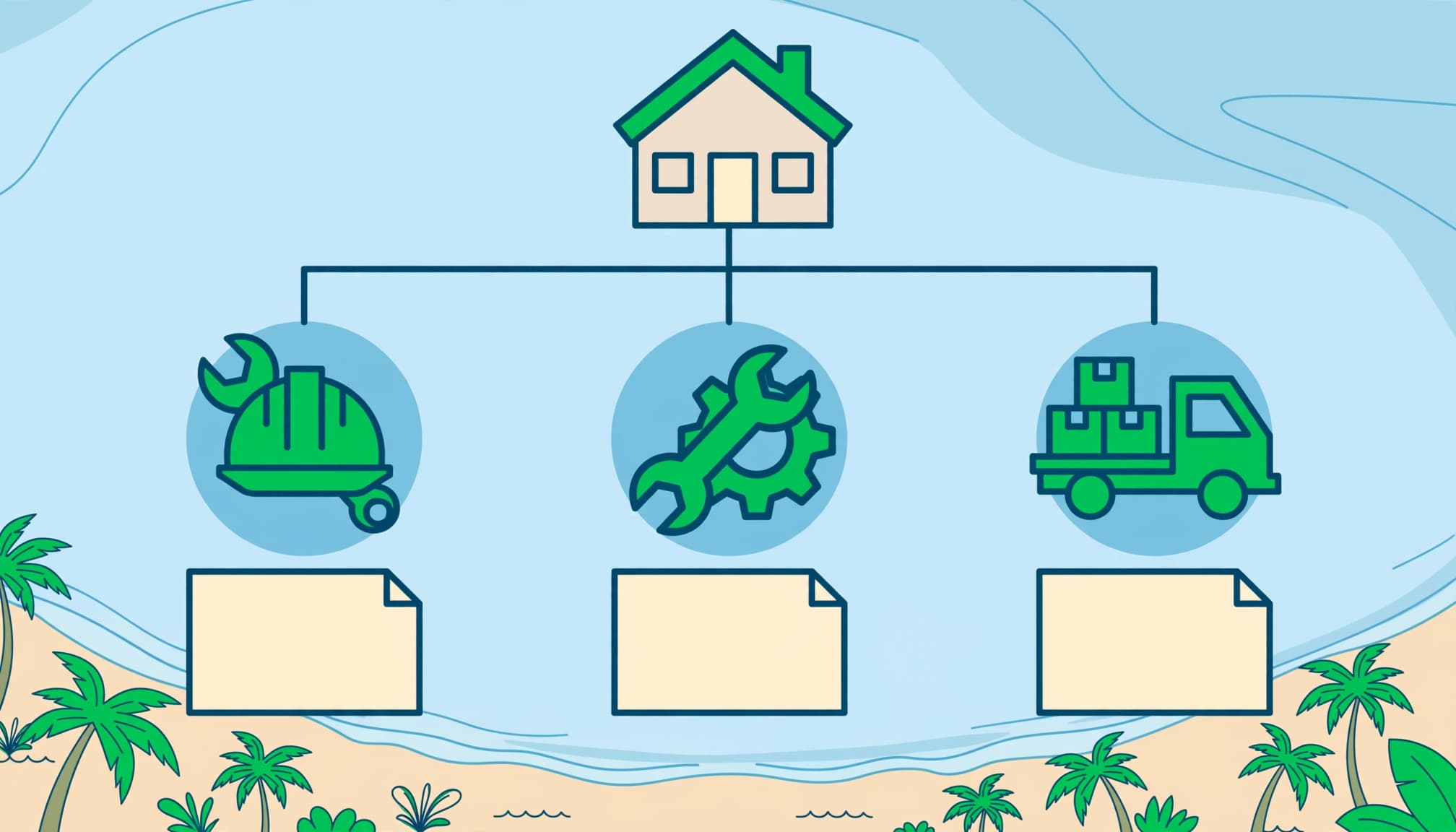
Ask for the names of the general contractor, each subcontractor, lower-tier trades, and suppliers who may have lien claims. Update the roster when new parties join the project.
A Notice to Owner identifies a party preserving potential lien rights. It isn’t itself a recorded lien or proof of nonpayment.
Add each notice to owner to the roster and match it to the appropriate invoices and releases. Don’t discard one because you’ve already paid the prime contractor.
Match Each Draw to Supporting Records
Before a draw, request a payment application and records showing that previously funded subcontractor and supplier balances were paid. Collect releases from the general contractor, lower-tier trades, and suppliers.
Match requested funds to completed work, delivered materials, or agreed milestones. Request appropriate waivers before or with payment. Use conditional language when payment hasn’t cleared, and verify bank clearance before relying on a conditional release.
Keep invoices, receipts, signed releases, payment confirmations, and approved change orders in one organized file. A release from one supplier doesn’t establish that another party has been paid.
Complete Closeout and Clear Recorded Liens
Final payment requires more than a finished appearance. Construction quality, payment reconciliation, and title protection each need their own records.
Request a Complete Final-Payment Package
Reconcile the contract balance, approved changes, allowances, and retainage. Confirm that agreed work is complete, punch-list corrections are resolved, required inspections have passed, and closeout documents are delivered.
Request the contractor’s final payment affidavit and appropriate releases from lien-eligible parties. Resolve listed unpaid balances through a documented process before releasing funds.
Keep warranties, manuals, permits, inspection records, invoices, and lien releases together. A verbal promise to finish outstanding work doesn’t replace written closeout terms.
A Recorded Lien Needs a Recorded Discharge
A private waiver and a recorded lien discharge aren’t interchangeable. When a recorded lien is paid in full, obtain the lienholder’s signed release of lien and have it recorded in the county where the property is located.
Paying the debt alone doesn’t erase the recorded claim.
Under Florida’s claim-of-lien deadline, a claim generally must be recorded within 90 days after the claimant’s final furnishing of labor, services, or materials. Don’t treat that period as a substitute for releases.
If you’re buying a recently built or remodeled Southwest Florida home, have your closing attorney or title professional address recent construction and unresolved liens before closing.
Frequently Asked Questions
Are Florida Lien Waivers Required With Every Payment?
There isn’t a blanket rule requiring every homeowner payment to include a waiver. Your contract can require appropriate releases in exchange for progress and final payments, subject to Florida’s statutory restrictions.
Does a Lender’s Draw Inspection Replace Waivers?
No. A draw inspection evaluates construction progress for financing purposes. It doesn’t confirm that every project bill has been paid or release a claimant’s rights to pursue a mechanic’s lien.
Does a Final Waiver Replace Warranty Documents?
No. A final waiver addresses the signer’s lien rights. Manufacturer warranties, workmanship coverage, manuals, and repair procedures remain separate parts of your home’s turnover package.
Protect Your Home With Clear Payment Records
Florida lien waivers provide useful protection when the signer, payment, covered work, and property details align. We recommend making documented payment and release procedures part of your project plan.
For help planning a Southwest Florida new build, renovation, or restoration, Get In Touch with our team.
Clear records support a dependable project today and a cleaner handover when your home is complete.